
Get trending papers in your email inbox once a day!
Get trending papers in your email inbox!
Subscribe



InteractiveOmni: A Unified Omni-modal Model for Audio-Visual Multi-turn Dialogue
We introduce InteractiveOmni, a unified and open-source omni-modal large language model for audio-visual multi-turn interaction, ranging from 4B to 8B parameters, designed to lead the field of lightweight models by offering comprehensive omni-modal understanding and speech generation capabilities. To achieve this, we integrate the vision encoder, audio encoder, large language model, and speech decoder into a unified model for understanding and generation tasks. We design a multi-stage training strategy to ensure robust cross-modal capabilities, including pre-training for omni-modal understanding, followed by post-training with speech conversation and audio-visual interaction. To enable human-like long-term conversational ability, we meticulously curate a multi-turn training dataset that enhances the model's ability to handle complex and multi-turn interactions. To effectively evaluate the multi-turn memory and speech interaction capabilities, we construct the multi-modal multi-turn memory benchmark and the multi-turn speech interaction benchmark. Experiments demonstrate that InteractiveOmni significantly outperforms leading open-source models and provides a more intelligent multi-turn audio-visual experience, particularly in its long-term memory capabilities. Notably, InteractiveOmni-4B is comparable to the much larger model like Qwen2.5-Omni-7B on general benchmarks, and it can retain 97% of the performance of the InteractiveOmni-8B while utilizing only 50% of the model size. Achieving state-of-the-art results against similarly sized models across image, audio, video understanding, and speech generation tasks, InteractiveOmni is an accessible, open-source foundation for next-generation intelligent interactive systems.


PreFLMR: Scaling Up Fine-Grained Late-Interaction Multi-modal Retrievers
Large Multimodal Models (LMMs) excel in natural language and visual understanding but are challenged by exacting tasks such as Knowledge-based Visual Question Answering (KB-VQA) which involve the retrieval of relevant information from document collections to use in shaping answers to questions. We present an extensive training and evaluation framework, M2KR, for KB-VQA. M2KR contains a collection of vision and language tasks which we have incorporated into a single suite of benchmark tasks for training and evaluating general-purpose multi-modal retrievers. We use M2KR to develop PreFLMR, a pre-trained version of the recently developed Fine-grained Late-interaction Multi-modal Retriever (FLMR) approach to KB-VQA, and we report new state-of-the-art results across a range of tasks. We also present investigations into the scaling behaviors of PreFLMR intended to be useful in future developments in general-purpose multi-modal retrievers.

RealTalk-CN: A Realistic Chinese Speech-Text Dialogue Benchmark With Cross-Modal Interaction Analysis
In recent years, large language models (LLMs) have achieved remarkable advancements in multimodal processing, including end-to-end speech-based language models that enable natural interactions and perform specific tasks in task-oriented dialogue (TOD) systems. However, existing TOD datasets are predominantly text-based, lacking real speech signals that are essential for evaluating the robustness of speech-based LLMs. Moreover, existing speech TOD datasets are primarily English and lack critical aspects such as speech disfluencies and speaker variations. To address these gaps, we introduce RealTalk-CN, the first Chinese multi-turn, multi-domain speech-text dual-modal TOD dataset, comprising 5.4k dialogues (60K utterances, 150 hours) with paired speech-text annotations. RealTalk-CN captures diverse dialogue scenarios with annotated spontaneous speech disfluencies, ensuring comprehensive coverage of real-world complexities in speech dialogue. In addition, we propose a novel cross-modal chat task that authentically simulates real-world user interactions, allowing dynamic switching between speech and text modalities. Our evaluation covers robustness to speech disfluencies, sensitivity to speaker characteristics, and cross-domain performance. Extensive experiments validate the effectiveness of RealTalk-CN, establishing a strong foundation for Chinese speech-based LLMs research.


VocalBench: Benchmarking the Vocal Conversational Abilities for Speech Interaction Models
The rapid advancement of large language models (LLMs) has accelerated the development of multi-modal models capable of vocal communication. Unlike text-based interactions, speech conveys rich and diverse information, including semantic content, acoustic variations, paralanguage cues, and environmental context. However, existing evaluations of speech interaction models predominantly focus on the quality of their textual responses, often overlooking critical aspects of vocal performance and lacking benchmarks with vocal-specific test instances. To address this gap, we propose VocalBench, a comprehensive benchmark designed to evaluate speech interaction models' capabilities in vocal communication. VocalBench comprises 9,400 carefully curated instances across four key dimensions: semantic quality, acoustic performance, conversational abilities, and robustness. It covers 16 fundamental skills essential for effective vocal interaction. Experimental results reveal significant variability in current model capabilities, each exhibiting distinct strengths and weaknesses, and provide valuable insights to guide future research in speech-based interaction systems. Code and evaluation instances are available at https://github.com/SJTU-OmniAgent/VocalBench.
IWR-Bench: Can LVLMs reconstruct interactive webpage from a user interaction video?
The webpage-to-code task requires models to understand visual representations of webpages and generate corresponding code. However, existing benchmarks primarily focus on static screenshot-to-code tasks, thereby overlooking the dynamic interactions fundamental to real-world web applications. To address this limitation, this paper introduces IWR-Bench, a novel benchmark for evaluating the capabilities of Large Vision-Language Models (LVLMs) in interactive webpage reconstruction from video. IWR-Bench comprises 113 meticulously curated tasks from 100 real-world websites, with 1,001 actions and featuring diverse interaction complexities (e.g., web games), visual styles, and domains. Aligning with standard web development practices, each task includes not only user interaction videos but also all crawled static assets (e.g., images, videos). This benchmark evaluates models on two fundamental challenges: comprehensive multi-modal reasoning to infer interaction logic from video and assets, and advanced code generation to translate this logic into functional code. An agent-as-a-judge framework with a comprehensive metric system automatically assesses the functional correctness and visual fidelity of generated webpages. Extensive experiments on 28 LVLMs reveal a significant challenge: the best model achieves an overall score of only 36.35%, as functional correctness (24.39% IFS) lags significantly behind visual fidelity (64.25% VFS). These results highlight critical limitations in current models' ability to reason about temporal dynamics and synthesize event-driven logic, establishing IWR-Bench as a challenging frontier for vision-language research. The benchmark and evaluation code will be made publicly available. Code is available at https://github.com/L-O-I/IWR-Bench.

Step-Audio: Unified Understanding and Generation in Intelligent Speech Interaction
Real-time speech interaction, serving as a fundamental interface for human-machine collaboration, holds immense potential. However, current open-source models face limitations such as high costs in voice data collection, weakness in dynamic control, and limited intelligence. To address these challenges, this paper introduces Step-Audio, the first production-ready open-source solution. Key contributions include: 1) a 130B-parameter unified speech-text multi-modal model that achieves unified understanding and generation, with the Step-Audio-Chat version open-sourced; 2) a generative speech data engine that establishes an affordable voice cloning framework and produces the open-sourced lightweight Step-Audio-TTS-3B model through distillation; 3) an instruction-driven fine control system enabling dynamic adjustments across dialects, emotions, singing, and RAP; 4) an enhanced cognitive architecture augmented with tool calling and role-playing abilities to manage complex tasks effectively. Based on our new StepEval-Audio-360 evaluation benchmark, Step-Audio achieves state-of-the-art performance in human evaluations, especially in terms of instruction following. On open-source benchmarks like LLaMA Question, shows 9.3% average performance improvement, demonstrating our commitment to advancing the development of open-source multi-modal language technologies. Our code and models are available at https://github.com/stepfun-ai/Step-Audio.


Griffin: Aerial-Ground Cooperative Detection and Tracking Dataset and Benchmark
Despite significant advancements, autonomous driving systems continue to struggle with occluded objects and long-range detection due to the inherent limitations of single-perspective sensing. Aerial-ground cooperation offers a promising solution by integrating UAVs' aerial views with ground vehicles' local observations. However, progress in this emerging field has been hindered by the absence of public datasets and standardized evaluation benchmarks. To address this gap, this paper presents a comprehensive solution for aerial-ground cooperative 3D perception through three key contributions: (1) Griffin, a large-scale multi-modal dataset featuring over 200 dynamic scenes (30k+ frames) with varied UAV altitudes (20-60m), diverse weather conditions, and occlusion-aware 3D annotations, enhanced by CARLA-AirSim co-simulation for realistic UAV dynamics; (2) A unified benchmarking framework for aerial-ground cooperative detection and tracking tasks, including protocols for evaluating communication efficiency, latency tolerance, and altitude adaptability; (3) AGILE, an instance-level intermediate fusion baseline that dynamically aligns cross-view features through query-based interaction, achieving an advantageous balance between communication overhead and perception accuracy. Extensive experiments prove the effectiveness of aerial-ground cooperative perception and demonstrate the direction of further research. The dataset and codes are available at https://github.com/wang-jh18-SVM/Griffin.
NExT-OMNI: Towards Any-to-Any Omnimodal Foundation Models with Discrete Flow Matching
Next-generation multimodal foundation models capable of any-to-any cross-modal generation and multi-turn interaction will serve as core components of artificial general intelligence systems, playing a pivotal role in human-machine interaction. However, most existing multimodal models remain constrained by autoregressive architectures, whose inherent limitations prevent a balanced integration of understanding and generation capabilities. Although hybrid and decoupling strategies have been explored to address these tasks within unified frameworks separately, their redundant, non-integrated designs limit their applicability to broader scenarios, such as cross-modal retrieval. In this work, we introduce NExT-OMNI, an open-source omnimodal foundation model that achieves unified modeling through discrete flow paradigms. By leveraging metric-induced probability paths and kinetic optimal velocities, NExT-OMNI natively supports any-to-any understanding and generation with enhanced response efficiency, while enabling broader application scenarios through concise unified representations rather than task-decoupled designs. Trained on large-scale interleaved text, image, video, and audio data, NExT-OMNI delivers competitive performance on multimodal generation and understanding benchmarks, while outperforming prior unified models in multi-turn multimodal interaction and cross-modal retrieval, highlighting its architectural advantages as a next-generation multimodal foundation model. To advance further research, we release training details, data protocols, and open-source both the code and model checkpoints.
TubeDETR: Spatio-Temporal Video Grounding with Transformers
We consider the problem of localizing a spatio-temporal tube in a video corresponding to a given text query. This is a challenging task that requires the joint and efficient modeling of temporal, spatial and multi-modal interactions. To address this task, we propose TubeDETR, a transformer-based architecture inspired by the recent success of such models for text-conditioned object detection. Our model notably includes: (i) an efficient video and text encoder that models spatial multi-modal interactions over sparsely sampled frames and (ii) a space-time decoder that jointly performs spatio-temporal localization. We demonstrate the advantage of our proposed components through an extensive ablation study. We also evaluate our full approach on the spatio-temporal video grounding task and demonstrate improvements over the state of the art on the challenging VidSTG and HC-STVG benchmarks. Code and trained models are publicly available at https://antoyang.github.io/tubedetr.html.

BioMol-MQA: A Multi-Modal Question Answering Dataset For LLM Reasoning Over Bio-Molecular Interactions
Retrieval augmented generation (RAG) has shown great power in improving Large Language Models (LLMs). However, most existing RAG-based LLMs are dedicated to retrieving single modality information, mainly text; while for many real-world problems, such as healthcare, information relevant to queries can manifest in various modalities such as knowledge graph, text (clinical notes), and complex molecular structure. Thus, being able to retrieve relevant multi-modality domain-specific information, and reason and synthesize diverse knowledge to generate an accurate response is important. To address the gap, we present BioMol-MQA, a new question-answering (QA) dataset on polypharmacy, which is composed of two parts (i) a multimodal knowledge graph (KG) with text and molecular structure for information retrieval; and (ii) challenging questions that designed to test LLM capabilities in retrieving and reasoning over multimodal KG to answer questions. Our benchmarks indicate that existing LLMs struggle to answer these questions and do well only when given the necessary background data, signaling the necessity for strong RAG frameworks.

AVE Speech Dataset: A Comprehensive Benchmark for Multi-Modal Speech Recognition Integrating Audio, Visual, and Electromyographic Signals
The global aging population faces considerable challenges, particularly in communication, due to the prevalence of hearing and speech impairments. To address these, we introduce the AVE speech dataset, a comprehensive multi-modal benchmark for speech recognition tasks. The dataset includes a 100-sentence Mandarin Chinese corpus with audio signals, lip-region video recordings, and six-channel electromyography (EMG) data, collected from 100 participants. Each subject read the entire corpus ten times, with each sentence averaging approximately two seconds in duration, resulting in over 55 hours of multi-modal speech data per modality. Experiments demonstrate that combining these modalities significantly improves recognition performance, particularly in cross-subject and high-noise environments. To our knowledge, this is the first publicly available sentence-level dataset integrating these three modalities for large-scale Mandarin speech recognition. We expect this dataset to drive advancements in both acoustic and non-acoustic speech recognition research, enhancing cross-modal learning and human-machine interaction.
MMSearch: Benchmarking the Potential of Large Models as Multi-modal Search Engines
The advent of Large Language Models (LLMs) has paved the way for AI search engines, e.g., SearchGPT, showcasing a new paradigm in human-internet interaction. However, most current AI search engines are limited to text-only settings, neglecting the multimodal user queries and the text-image interleaved nature of website information. Recently, Large Multimodal Models (LMMs) have made impressive strides. Yet, whether they can function as AI search engines remains under-explored, leaving the potential of LMMs in multimodal search an open question. To this end, we first design a delicate pipeline, MMSearch-Engine, to empower any LMMs with multimodal search capabilities. On top of this, we introduce MMSearch, a comprehensive evaluation benchmark to assess the multimodal search performance of LMMs. The curated dataset contains 300 manually collected instances spanning 14 subfields, which involves no overlap with the current LMMs' training data, ensuring the correct answer can only be obtained within searching. By using MMSearch-Engine, the LMMs are evaluated by performing three individual tasks (requery, rerank, and summarization), and one challenging end-to-end task with a complete searching process. We conduct extensive experiments on closed-source and open-source LMMs. Among all tested models, GPT-4o with MMSearch-Engine achieves the best results, which surpasses the commercial product, Perplexity Pro, in the end-to-end task, demonstrating the effectiveness of our proposed pipeline. We further present error analysis to unveil current LMMs still struggle to fully grasp the multimodal search tasks, and conduct ablation study to indicate the potential of scaling test-time computation for AI search engine. We hope MMSearch may provide unique insights to guide the future development of multimodal AI search engine. Project Page: https://mmsearch.github.io




MuMA-ToM: Multi-modal Multi-Agent Theory of Mind
Understanding people's social interactions in complex real-world scenarios often relies on intricate mental reasoning. To truly understand how and why people interact with one another, we must infer the underlying mental states that give rise to the social interactions, i.e., Theory of Mind reasoning in multi-agent interactions. Additionally, social interactions are often multi-modal -- we can watch people's actions, hear their conversations, and/or read about their past behaviors. For AI systems to successfully and safely interact with people in real-world environments, they also need to understand people's mental states as well as their inferences about each other's mental states based on multi-modal information about their interactions. For this, we introduce MuMA-ToM, a Multi-modal Multi-Agent Theory of Mind benchmark. MuMA-ToM is the first multi-modal Theory of Mind benchmark that evaluates mental reasoning in embodied multi-agent interactions. In MuMA-ToM, we provide video and text descriptions of people's multi-modal behavior in realistic household environments. Based on the context, we then ask questions about people's goals, beliefs, and beliefs about others' goals. We validated MuMA-ToM in a human experiment and provided a human baseline. We also proposed a novel multi-modal, multi-agent ToM model, LIMP (Language model-based Inverse Multi-agent Planning). Our experimental results show that LIMP significantly outperforms state-of-the-art methods, including large multi-modal models (e.g., GPT-4o, Gemini-1.5 Pro) and a recent multi-modal ToM model, BIP-ALM.

CountGD: Multi-Modal Open-World Counting
The goal of this paper is to improve the generality and accuracy of open-vocabulary object counting in images. To improve the generality, we repurpose an open-vocabulary detection foundation model (GroundingDINO) for the counting task, and also extend its capabilities by introducing modules to enable specifying the target object to count by visual exemplars. In turn, these new capabilities - being able to specify the target object by multi-modalites (text and exemplars) - lead to an improvement in counting accuracy. We make three contributions: First, we introduce the first open-world counting model, CountGD, where the prompt can be specified by a text description or visual exemplars or both; Second, we show that the performance of the model significantly improves the state of the art on multiple counting benchmarks - when using text only, CountGD is comparable to or outperforms all previous text-only works, and when using both text and visual exemplars, we outperform all previous models; Third, we carry out a preliminary study into different interactions between the text and visual exemplar prompts, including the cases where they reinforce each other and where one restricts the other. The code and an app to test the model are available at https://www.robots.ox.ac.uk/~vgg/research/countgd/.

WildSpeech-Bench: Benchmarking Audio LLMs in Natural Speech Conversation
Recent multi-modal Large Language Models (LLMs) such as GPT-4o have demonstrated strong capabilities of direct speech interaction. However, the lack of specialized and comprehensive benchmarks for end-to-end speech LLM evaluation hinders optimizing the user experience of Audio LLMs in real-world applications. Existing evaluation methods often adapt text-based benchmarks, overlooking speech's unique characteristics and challenges, including prosody, homophones, stuttering, and differing user expectations. Here, we present a novel approach to thoroughly evaluate LLMs in practical speech conversations. We systematically curate real-world chat data relevant to spoken scenarios, introduce diversity in speaker attributes and acoustic conditions, and augment the dataset with speech-specific phenomena. We further design a query-aware evaluation method to use customized evaluation checklists and prompts to enhance the accuracy of automatic evaluation. We conduct comprehensive testing and detailed analysis of various mainstream speech models, revealing significant differences in model performance across different speech scenarios. The use of query-aware evaluation further enables a finer-grained assessment under various speech-specific scenarios. Our benchmark can provide valuable insights for speech model development and evaluation.
MMRel: A Relation Understanding Dataset and Benchmark in the MLLM Era
Despite the recent advancements in Multi-modal Large Language Models (MLLMs), understanding inter-object relations, i.e., interactions or associations between distinct objects, remains a major challenge for such models. This issue significantly hinders their advanced reasoning capabilities and is primarily due to the lack of large-scale, high-quality, and diverse multi-modal data essential for training and evaluating MLLMs. In this paper, we provide a taxonomy of inter-object relations and introduce Multi-Modal Relation Understanding (MMRel), a comprehensive dataset designed to bridge this gap by providing large-scale, high-quality and diverse data for studying inter-object relations with MLLMs. MMRel features three distinctive attributes: (i) It includes over 15K question-answer pairs, which are sourced from three distinct domains, ensuring large scale and high diversity; (ii) It contains a subset featuring highly unusual relations, on which MLLMs often fail due to hallucinations, thus are very challenging; (iii) It provides manually verified high-quality labels for inter-object relations. Thanks to these features, MMRel is ideal for evaluating MLLMs on relation understanding, as well as being used to fine-tune MLLMs to enhance relation understanding and even benefit overall performance in various vision-language tasks. Extensive experiments on various popular MLLMs validate the effectiveness of MMRel. Both MMRel dataset and the complete labeling scripts have been made publicly available.

JRDB-Social: A Multifaceted Robotic Dataset for Understanding of Context and Dynamics of Human Interactions Within Social Groups
Understanding human social behaviour is crucial in computer vision and robotics. Micro-level observations like individual actions fall short, necessitating a comprehensive approach that considers individual behaviour, intra-group dynamics, and social group levels for a thorough understanding. To address dataset limitations, this paper introduces JRDB-Social, an extension of JRDB. Designed to fill gaps in human understanding across diverse indoor and outdoor social contexts, JRDB-Social provides annotations at three levels: individual attributes, intra-group interactions, and social group context. This dataset aims to enhance our grasp of human social dynamics for robotic applications. Utilizing the recent cutting-edge multi-modal large language models, we evaluated our benchmark to explore their capacity to decipher social human behaviour.

VideoCAD: A Large-Scale Video Dataset for Learning UI Interactions and 3D Reasoning from CAD Software
Computer-Aided Design (CAD) is a time-consuming and complex process, requiring precise, long-horizon user interactions with intricate 3D interfaces. While recent advances in AI-driven user interface (UI) agents show promise, most existing datasets and methods focus on short, low-complexity tasks in mobile or web applications, failing to capture the demands of professional engineering tools. In this work, we introduce VideoCAD, the first attempt at engineering UI interaction learning for precision tasks. Specifically, VideoCAD is a large-scale synthetic dataset consisting of over 41K annotated video recordings of CAD operations, generated using an automated framework for collecting high-fidelity UI action data from human-made CAD designs. Compared to existing datasets, VideoCAD offers an order of magnitude higher complexity in UI interaction learning for real-world engineering tasks, having up to a 20x longer time horizon than other datasets. We show two important downstream applications of VideoCAD: learning UI interactions from professional precision 3D CAD tools and a visual question-answering (VQA) benchmark designed to evaluate multimodal large language models' (LLM) spatial reasoning and video understanding abilities. To learn the UI interactions, we propose VideoCADFormer - a state-of-the-art model in learning CAD interactions directly from video, which outperforms multiple behavior cloning baselines. Both VideoCADFormer and the VQA benchmark derived from VideoCAD reveal key challenges in the current state of video-based UI understanding, including the need for precise action grounding, multi-modal and spatial reasoning, and long-horizon dependencies.
ReMamber: Referring Image Segmentation with Mamba Twister
Referring Image Segmentation~(RIS) leveraging transformers has achieved great success on the interpretation of complex visual-language tasks. However, the quadratic computation cost makes it resource-consuming in capturing long-range visual-language dependencies. Fortunately, Mamba addresses this with efficient linear complexity in processing. However, directly applying Mamba to multi-modal interactions presents challenges, primarily due to inadequate channel interactions for the effective fusion of multi-modal data. In this paper, we propose ReMamber, a novel RIS architecture that integrates the power of Mamba with a multi-modal Mamba Twister block. The Mamba Twister explicitly models image-text interaction, and fuses textual and visual features through its unique channel and spatial twisting mechanism. We achieve competitive results on three challenging benchmarks with a simple and efficient architecture. Moreover, we conduct thorough analyses of ReMamber and discuss other fusion designs using Mamba. These provide valuable perspectives for future research. The code has been released at: https://github.com/yyh-rain-song/ReMamber.


Thinking by Doing: Building Efficient World Model Reasoning in LLMs via Multi-turn Interaction
Developing robust world model reasoning is crucial for large language model (LLM) agents to plan and interact in complex environments. While multi-turn interaction offers a superior understanding of environmental dynamics via authentic feedback, current approaches often impose a rigid reasoning process, which constrains the model's active learning, ultimately hindering efficient world model reasoning. To address these issues, we explore world-model internalization through efficient interaction and active reasoning (WMAct), which liberates the model from structured reasoning, allowing the model to shape thinking directly through its doing, and achieves effective and efficient world model reasoning with two key mechanisms: (1) a reward rescaling mechanism adjusting outcome reward based on action efficacy to incentivize redundancy reduction and purposeful interaction; (2) an interaction frequency annealing strategy to progressively reduce the maximum allowed interaction turns, which compels the model to condense its learning and internalize environmental dynamics rather than over-relying on environmental cues. Our experiments on Sokoban, Maze, and Taxi show that WMAct yields effective world model reasoning capable of resolving tasks in a single turn that previously required multiple interactions and fosters strong transferability to complex environments, improving performance on a suite of reasoning benchmarks.
MinMo: A Multimodal Large Language Model for Seamless Voice Interaction
Recent advancements in large language models (LLMs) and multimodal speech-text models have laid the groundwork for seamless voice interactions, enabling real-time, natural, and human-like conversations. Previous models for voice interactions are categorized as native and aligned. Native models integrate speech and text processing in one framework but struggle with issues like differing sequence lengths and insufficient pre-training. Aligned models maintain text LLM capabilities but are often limited by small datasets and a narrow focus on speech tasks. In this work, we introduce MinMo, a Multimodal Large Language Model with approximately 8B parameters for seamless voice interaction. We address the main limitations of prior aligned multimodal models. We train MinMo through multiple stages of speech-to-text alignment, text-to-speech alignment, speech-to-speech alignment, and duplex interaction alignment, on 1.4 million hours of diverse speech data and a broad range of speech tasks. After the multi-stage training, MinMo achieves state-of-the-art performance across various benchmarks for voice comprehension and generation while maintaining the capabilities of text LLMs, and also facilitates full-duplex conversation, that is, simultaneous two-way communication between the user and the system. Moreover, we propose a novel and simple voice decoder that outperforms prior models in voice generation. The enhanced instruction-following capabilities of MinMo supports controlling speech generation based on user instructions, with various nuances including emotions, dialects, and speaking rates, and mimicking specific voices. For MinMo, the speech-to-text latency is approximately 100ms, full-duplex latency is approximately 600ms in theory and 800ms in practice. The MinMo project web page is https://funaudiollm.github.io/minmo, and the code and models will be released soon.





MCP-RADAR: A Multi-Dimensional Benchmark for Evaluating Tool Use Capabilities in Large Language Models
As Large Language Models (LLMs) evolve from passive text generators to active reasoning agents capable of tool interaction, the Model Context Protocol (MCP) has emerged as a standardized framework for dynamic tool discovery and orchestration. Despite widespread industry adoption, existing evaluation methodologies fail to adequately assess tool utilization capabilities within this new paradigm. This paper introduces MCP-RADAR, the first comprehensive benchmark specifically designed to evaluate LLM performance in the MCP framework through a novel five-dimensional approach measuring: answer accuracy, tool selection efficiency, computational resource efficiency, parameter construction accuracy, and execution speed. Unlike conventional benchmarks that rely on subjective human evaluations or binary success metrics, MCP-RADAR employs objective, quantifiable measurements across multiple task domains including software engineering, mathematical reasoning, and general problem-solving. Our evaluations of leading commercial and open-source LLMs reveal distinctive capability profiles with significant trade-offs between accuracy, efficiency, and speed, challenging traditional single-metric performance rankings. Besides, we provide valuable guidance for developers to optimize their tools for maximum model compatibility and effectiveness. While focused on MCP due to its standardized approach, our methodology remains applicable across all LLM agent tool integration frameworks, providing valuable insights for both LLM developers and tool creators to optimize the entire LLM-tool interaction ecosystem. The implementation, configurations, and datasets used in our evaluation are publicly available at https://anonymous.4open.science/r/MCPRadar-B143.
Audio MultiChallenge: A Multi-Turn Evaluation of Spoken Dialogue Systems on Natural Human Interaction
End-to-end (E2E) spoken dialogue systems are increasingly replacing cascaded pipelines for voice-based human-AI interaction, processing raw audio directly without intermediate transcription. Existing benchmarks primarily evaluate these models on synthetic speech and single-turn tasks, leaving realistic multi-turn conversational ability underexplored. We introduce Audio MultiChallenge, an open-source benchmark to evaluate E2E spoken dialogue systems under natural multi-turn interaction patterns. Building on the text-based MultiChallenge framework, which evaluates Inference Memory, Instruction Retention, and Self Coherence, we introduce a new axis Voice Editing that tests robustness to mid-utterance speech repairs and backtracking. We further augment each axis to the audio modality, such as introducing Audio-Cue challenges for Inference Memory that require recalling ambient sounds and paralinguistic signals beyond semantic content. We curate 452 conversations from 47 speakers with 1,712 instance-specific rubrics through a hybrid audio-native agentic and human-in-the-loop pipeline that exposes model failures at scale while preserving natural disfluencies found in unscripted human speech. Our evaluation of proprietary and open-source models reveals that even frontier models struggle on our benchmark, with Gemini 3 Pro Preview (Thinking), our highest-performing model achieving a 54.65% pass rate. Error analysis shows that models fail most often on our new axes and that Self Coherence degrades with longer audio context. These failures reflect difficulty of tracking edits, audio cues, and long-range context in natural spoken dialogue. Audio MultiChallenge provides a reproducible testbed to quantify them and drive improvements in audio-native multi-turn interaction capability.
DanceTogether! Identity-Preserving Multi-Person Interactive Video Generation
Controllable video generation (CVG) has advanced rapidly, yet current systems falter when more than one actor must move, interact, and exchange positions under noisy control signals. We address this gap with DanceTogether, the first end-to-end diffusion framework that turns a single reference image plus independent pose-mask streams into long, photorealistic videos while strictly preserving every identity. A novel MaskPoseAdapter binds "who" and "how" at every denoising step by fusing robust tracking masks with semantically rich-but noisy-pose heat-maps, eliminating the identity drift and appearance bleeding that plague frame-wise pipelines. To train and evaluate at scale, we introduce (i) PairFS-4K, 26 hours of dual-skater footage with 7,000+ distinct IDs, (ii) HumanRob-300, a one-hour humanoid-robot interaction set for rapid cross-domain transfer, and (iii) TogetherVideoBench, a three-track benchmark centered on the DanceTogEval-100 test suite covering dance, boxing, wrestling, yoga, and figure skating. On TogetherVideoBench, DanceTogether outperforms the prior arts by a significant margin. Moreover, we show that a one-hour fine-tune yields convincing human-robot videos, underscoring broad generalization to embodied-AI and HRI tasks. Extensive ablations confirm that persistent identity-action binding is critical to these gains. Together, our model, datasets, and benchmark lift CVG from single-subject choreography to compositionally controllable, multi-actor interaction, opening new avenues for digital production, simulation, and embodied intelligence. Our video demos and code are available at https://DanceTog.github.io/.


Rethinking Whole-Body CT Image Interpretation: An Abnormality-Centric Approach
Automated interpretation of CT images-particularly localizing and describing abnormal findings across multi-plane and whole-body scans-remains a significant challenge in clinical radiology. This work aims to address this challenge through four key contributions: (i) On taxonomy, we collaborate with senior radiologists to propose a comprehensive hierarchical classification system, with 404 representative abnormal findings across all body regions; (ii) On data, we contribute a dataset containing over 14.5K CT images from multiple planes and all human body regions, and meticulously provide grounding annotations for over 19K abnormalities, each linked to the detailed description and cast into the taxonomy; (iii) On model development, we propose OminiAbnorm-CT, which can automatically ground and describe abnormal findings on multi-plane and whole-body CT images based on text queries, while also allowing flexible interaction through visual prompts; (iv) On benchmarks, we establish three representative evaluation tasks based on real clinical scenarios. Through extensive experiments, we show that OminiAbnorm-CT can significantly outperform existing methods on all the tasks and metrics.

DialogGen: Multi-modal Interactive Dialogue System for Multi-turn Text-to-Image Generation
Text-to-image (T2I) generation models have significantly advanced in recent years. However, effective interaction with these models is challenging for average users due to the need for specialized prompt engineering knowledge and the inability to perform multi-turn image generation, hindering a dynamic and iterative creation process. Recent attempts have tried to equip Multi-modal Large Language Models (MLLMs) with T2I models to bring the user's natural language instructions into reality. Hence, the output modality of MLLMs is extended, and the multi-turn generation quality of T2I models is enhanced thanks to the strong multi-modal comprehension ability of MLLMs. However, many of these works face challenges in identifying correct output modalities and generating coherent images accordingly as the number of output modalities increases and the conversations go deeper. Therefore, we propose DialogGen, an effective pipeline to align off-the-shelf MLLMs and T2I models to build a Multi-modal Interactive Dialogue System (MIDS) for multi-turn Text-to-Image generation. It is composed of drawing prompt alignment, careful training data curation, and error correction. Moreover, as the field of MIDS flourishes, comprehensive benchmarks are urgently needed to evaluate MIDS fairly in terms of output modality correctness and multi-modal output coherence. To address this issue, we introduce the Multi-modal Dialogue Benchmark (DialogBen), a comprehensive bilingual benchmark designed to assess the ability of MLLMs to generate accurate and coherent multi-modal content that supports image editing. It contains two evaluation metrics to measure the model's ability to switch modalities and the coherence of the output images. Our extensive experiments on DialogBen and user study demonstrate the effectiveness of DialogGen compared with other State-of-the-Art models.


LiveTalk: Real-Time Multimodal Interactive Video Diffusion via Improved On-Policy Distillation
Real-time video generation via diffusion is essential for building general-purpose multimodal interactive AI systems. However, the simultaneous denoising of all video frames with bidirectional attention via an iterative process in diffusion models prevents real-time interaction. While existing distillation methods can make the model autoregressive and reduce sampling steps to mitigate this, they focus primarily on text-to-video generation, leaving the human-AI interaction unnatural and less efficient. This paper targets real-time interactive video diffusion conditioned on a multimodal context, including text, image, and audio, to bridge the gap. Given the observation that the leading on-policy distillation approach Self Forcing encounters challenges (visual artifacts like flickering, black frames, and quality degradation) with multimodal conditioning, we investigate an improved distillation recipe with emphasis on the quality of condition inputs as well as the initialization and schedule for the on-policy optimization. On benchmarks for multimodal-conditioned (audio, image, and text) avatar video generation including HDTF, AVSpeech, and CelebV-HQ, our distilled model matches the visual quality of the full-step, bidirectional baselines of similar or larger size with 20x less inference cost and latency. Further, we integrate our model with audio language models and long-form video inference technique Anchor-Heavy Identity Sinks to build LiveTalk, a real-time multimodal interactive avatar system. System-level evaluation on our curated multi-turn interaction benchmark shows LiveTalk outperforms state-of-the-art models (Sora2, Veo3) in multi-turn video coherence and content quality, while reducing response latency from 1 to 2 minutes to real-time generation, enabling seamless human-AI multimodal interaction.


SoMi-ToM: Evaluating Multi-Perspective Theory of Mind in Embodied Social Interactions
Humans continuously infer the states, goals, and behaviors of others by perceiving their surroundings in dynamic, real-world social interactions. However, most Theory of Mind (ToM) benchmarks only evaluate static, text-based scenarios, which have a significant gap compared to real interactions. We propose the SoMi-ToM benchmark, designed to evaluate multi-perspective ToM in embodied multi-agent complex social interactions. This benchmark is based on rich multimodal interaction data generated by the interaction environment SoMi, covering diverse crafting goals and social relationships. Our framework supports multi-level evaluation: (1) first-person evaluation provides multimodal (visual, dialogue, action, etc.) input from a first-person perspective during a task for real-time state inference, (2) third-person evaluation provides complete third-person perspective video and text records after a task for goal and behavior inference. This evaluation method allows for a more comprehensive examination of a model's ToM capabilities from both the subjective immediate experience and the objective global observation. We constructed a challenging dataset containing 35 third-person perspective videos, 363 first-person perspective images, and 1225 expert-annotated multiple-choice questions (three options). On this dataset, we systematically evaluated the performance of human subjects and several state-of-the-art large vision-language models (LVLMs). The results show that LVLMs perform significantly worse than humans on SoMi-ToM: the average accuracy gap between humans and models is 40.1% in first-person evaluation and 26.4% in third-person evaluation. This indicates that future LVLMs need to further improve their ToM capabilities in embodied, complex social interactions.

AViLA: Asynchronous Vision-Language Agent for Streaming Multimodal Data Interaction
An ideal vision-language agent serves as a bridge between the human users and their surrounding physical world in real-world applications like autonomous driving and embodied agents, and proactively provides accurate and timely responses given user intents. An intriguing challenge arises when agents interact with the world as a dynamic data stream and ad-hoc queries from users: supporting knowledge for queries, namely evidence, usually appears asynchronously with the arrival time of queries, and agents need to ground their responses in historical data, present observations, and even future streams. We frame this challenge as Query-Evidence Asynchrony, where user queries and their supporting evidence typically arrive asynchronously in the streaming setting. This setting requires not only strong reasoning capabilities but also the ability to retain past observations and respond to queries with temporal awareness. In this paper, we introduce a diagnostic benchmark that evaluates Multimodal Large Language Models (MLLMs) on their ability to handle interaction with streaming data. Further, we present AViLA, Asynchronous Video-Language Agent for streaming data interaction that can handle ad-hoc queries and give time-aware responses. For this purpose, AViLA consists of three key modules: comprehensive memory retention, evidence identification, and evidence-grounded trigger, that are designed to maintain a general-purpose memory and respond readily and timely to queries. Our experiments show that existing models often fail to respond at appropriate times, while AViLA significantly improves both accuracy and temporal awareness. Our code and dataset will be publicly available.
InterCLIP-MEP: Interactive CLIP and Memory-Enhanced Predictor for Multi-modal Sarcasm Detection
The prevalence of sarcasm in social media, conveyed through text-image combinations, presents significant challenges for sentiment analysis and intention mining. Current multi-modal sarcasm detection methods have been proven to struggle with biases from spurious cues, leading to a superficial understanding of the complex interactions between text and image. To address these issues, we propose InterCLIP-MEP, a robust framework for multi-modal sarcasm detection. InterCLIP-MEP introduces a refined variant of CLIP, Interactive CLIP (InterCLIP), as the backbone, enhancing sample representations by embedding cross-modality information in each encoder. Furthermore, a novel training strategy is designed to adapt InterCLIP for a Memory-Enhanced Predictor (MEP). MEP uses dynamic dual-channel memory to store valuable historical knowledge of test samples and then leverages this memory as a non-parametric classifier to derive the final prediction. By using InterCLIP to encode text-image interactions more effectively and incorporating MEP, InterCLIP-MEP offers a more robust recognition of multi-modal sarcasm. Experiments demonstrate that InterCLIP-MEP achieves state-of-the-art performance on the MMSD2.0 benchmark. Code and data are available at [https://github.com/CoderChen01/InterCLIP-MEP](https://github.com/CoderChen01/InterCLIP-MEP).

NuPlanQA: A Large-Scale Dataset and Benchmark for Multi-View Driving Scene Understanding in Multi-Modal Large Language Models
Recent advances in multi-modal large language models (MLLMs) have demonstrated strong performance across various domains; however, their ability to comprehend driving scenes remains less proven. The complexity of driving scenarios, which includes multi-view information, poses significant challenges for existing MLLMs. In this paper, we introduce NuPlanQA-Eval, a multi-view, multi-modal evaluation benchmark for driving scene understanding. To further support generalization to multi-view driving scenarios, we also propose NuPlanQA-1M, a large-scale dataset comprising 1M real-world visual question-answering (VQA) pairs. For context-aware analysis of traffic scenes, we categorize our dataset into nine subtasks across three core skills: Road Environment Perception, Spatial Relations Recognition, and Ego-Centric Reasoning. Furthermore, we present BEV-LLM, integrating Bird's-Eye-View (BEV) features from multi-view images into MLLMs. Our evaluation results reveal key challenges that existing MLLMs face in driving scene-specific perception and spatial reasoning from ego-centric perspectives. In contrast, BEV-LLM demonstrates remarkable adaptability to this domain, outperforming other models in six of the nine subtasks. These findings highlight how BEV integration enhances multi-view MLLMs while also identifying key areas that require further refinement for effective adaptation to driving scenes. To facilitate further research, we publicly release NuPlanQA at https://github.com/sungyeonparkk/NuPlanQA.
Automotive-ENV: Benchmarking Multimodal Agents in Vehicle Interface Systems
Multimodal agents have demonstrated strong performance in general GUI interactions, but their application in automotive systems has been largely unexplored. In-vehicle GUIs present distinct challenges: drivers' limited attention, strict safety requirements, and complex location-based interaction patterns. To address these challenges, we introduce Automotive-ENV, the first high-fidelity benchmark and interaction environment tailored for vehicle GUIs. This platform defines 185 parameterized tasks spanning explicit control, implicit intent understanding, and safety-aware tasks, and provides structured multimodal observations with precise programmatic checks for reproducible evaluation. Building on this benchmark, we propose ASURADA, a geo-aware multimodal agent that integrates GPS-informed context to dynamically adjust actions based on location, environmental conditions, and regional driving norms. Experiments show that geo-aware information significantly improves success on safety-aware tasks, highlighting the importance of location-based context in automotive environments. We will release Automotive-ENV, complete with all tasks and benchmarking tools, to further the development of safe and adaptive in-vehicle agents.
Rethinking Cross-Modal Interaction in Multimodal Diffusion Transformers
Multimodal Diffusion Transformers (MM-DiTs) have achieved remarkable progress in text-driven visual generation. However, even state-of-the-art MM-DiT models like FLUX struggle with achieving precise alignment between text prompts and generated content. We identify two key issues in the attention mechanism of MM-DiT, namely 1) the suppression of cross-modal attention due to token imbalance between visual and textual modalities and 2) the lack of timestep-aware attention weighting, which hinder the alignment. To address these issues, we propose Temperature-Adjusted Cross-modal Attention (TACA), a parameter-efficient method that dynamically rebalances multimodal interactions through temperature scaling and timestep-dependent adjustment. When combined with LoRA fine-tuning, TACA significantly enhances text-image alignment on the T2I-CompBench benchmark with minimal computational overhead. We tested TACA on state-of-the-art models like FLUX and SD3.5, demonstrating its ability to improve image-text alignment in terms of object appearance, attribute binding, and spatial relationships. Our findings highlight the importance of balancing cross-modal attention in improving semantic fidelity in text-to-image diffusion models. Our codes are publicly available at https://github.com/Vchitect/TACA


SC-Safety: A Multi-round Open-ended Question Adversarial Safety Benchmark for Large Language Models in Chinese
Large language models (LLMs), like ChatGPT and GPT-4, have demonstrated remarkable abilities in natural language understanding and generation. However, alongside their positive impact on our daily tasks, they can also produce harmful content that negatively affects societal perceptions. To systematically assess the safety of Chinese LLMs, we introduce SuperCLUE-Safety (SC-Safety) - a multi-round adversarial benchmark with 4912 open-ended questions covering more than 20 safety sub-dimensions. Adversarial human-model interactions and conversations significantly increase the challenges compared to existing methods. Experiments on 13 major LLMs supporting Chinese yield the following insights: 1) Closed-source models outperform open-sourced ones in terms of safety; 2) Models released from China demonstrate comparable safety levels to LLMs like GPT-3.5-turbo; 3) Some smaller models with 6B-13B parameters can compete effectively in terms of safety. By introducing SC-Safety, we aim to promote collaborative efforts to create safer and more trustworthy LLMs. The benchmark and findings provide guidance on model selection. Our benchmark can be found at https://www.CLUEbenchmarks.com
HumanSense: From Multimodal Perception to Empathetic Context-Aware Responses through Reasoning MLLMs
While Multimodal Large Language Models (MLLMs) show immense promise for achieving truly human-like interactions, progress is hindered by the lack of fine-grained evaluation frameworks for human-centered scenarios, encompassing both the understanding of complex human intentions and the provision of empathetic, context-aware responses. Here we introduce HumanSense, a comprehensive benchmark designed to evaluate the human-centered perception and interaction capabilities of MLLMs, with a particular focus on deep understanding of extended multimodal contexts and the formulation of rational feedback. Our evaluation reveals that leading MLLMs still have considerable room for improvement, particularly for advanced interaction-oriented tasks. Supplementing visual input with audio and text information yields substantial improvements, and Omni-modal models show advantages on these tasks. Furthermore, we argue that appropriate feedback stems from a contextual analysis of the interlocutor's needs and emotions, with reasoning ability serving as the key to unlocking it. Accordingly, we employ a multi-stage, modality-progressive reinforcement learning to enhance the reasoning abilities of an Omni model, achieving substantial gains on evaluation results. Additionally, we observe that successful reasoning processes exhibit highly consistent thought patterns. By designing corresponding prompts, we also enhance the performance of non-reasoning models in a training-free manner. Project page: brightpinkhttps://digital-avatar.github.io/ai/HumanSense/
OmniPlay: Benchmarking Omni-Modal Models on Omni-Modal Game Playing
While generalist foundation models like Gemini and GPT-4o demonstrate impressive multi-modal competence, existing evaluations fail to test their intelligence in dynamic, interactive worlds. Static benchmarks lack agency, while interactive benchmarks suffer from a severe modal bottleneck, typically ignoring crucial auditory and temporal cues. To bridge this evaluation chasm, we introduce OmniPlay, a diagnostic benchmark designed not just to evaluate, but to probe the fusion and reasoning capabilities of agentic models across the full sensory spectrum. Built on a core philosophy of modality interdependence, OmniPlay comprises a suite of five game environments that systematically create scenarios of both synergy and conflict, forcing agents to perform genuine cross-modal reasoning. Our comprehensive evaluation of six leading omni-modal models reveals a critical dichotomy: they exhibit superhuman performance on high-fidelity memory tasks but suffer from systemic failures in challenges requiring robust reasoning and strategic planning. We demonstrate that this fragility stems from brittle fusion mechanisms, which lead to catastrophic performance degradation under modality conflict and uncover a counter-intuitive "less is more" paradox, where removing sensory information can paradoxically improve performance. Our findings suggest that the path toward robust AGI requires a research focus beyond scaling to explicitly address synergistic fusion. Our platform is available for anonymous review at https://github.com/fuqingbie/omni-game-benchmark.

PSALM: Pixelwise SegmentAtion with Large Multi-Modal Model
PSALM is a powerful extension of the Large Multi-modal Model (LMM) to address the segmentation task challenges. To overcome the limitation of the LMM being limited to textual output, PSALM incorporates a mask decoder and a well-designed input schema to handle a variety of segmentation tasks. This schema includes images, task instructions, conditional prompts, and mask tokens, which enable the model to generate and classify segmentation masks effectively. The flexible design of PSALM supports joint training across multiple datasets and tasks, leading to improved performance and task generalization. PSALM achieves superior results on several benchmarks, such as RefCOCO/RefCOCO+/RefCOCOg, COCO Panoptic Segmentation, and COCO-Interactive, and further exhibits zero-shot capabilities on unseen tasks, such as open-vocabulary segmentation, generalized referring expression segmentation and video object segmentation, making a significant step towards a GPT moment in computer vision. Through extensive experiments, PSALM demonstrates its potential to transform the domain of image segmentation, leveraging the robust visual understanding capabilities of LMMs as seen in natural language processing. Code and models are available at https://github.com/zamling/PSALM.
Deciphering Cross-Modal Alignment in Large Vision-Language Models with Modality Integration Rate
We present the Modality Integration Rate (MIR), an effective, robust, and generalized metric to indicate the multi-modal pre-training quality of Large Vision Language Models (LVLMs). Large-scale pre-training plays a critical role in building capable LVLMs, while evaluating its training quality without the costly supervised fine-tuning stage is under-explored. Loss, perplexity, and in-context evaluation results are commonly used pre-training metrics for Large Language Models (LLMs), while we observed that these metrics are less indicative when aligning a well-trained LLM with a new modality. Due to the lack of proper metrics, the research of LVLMs in the critical pre-training stage is hindered greatly, including the training data choice, efficient module design, etc. In this paper, we propose evaluating the pre-training quality from the inter-modal distribution distance perspective and present MIR, the Modality Integration Rate, which is 1) Effective to represent the pre-training quality and show a positive relation with the benchmark performance after supervised fine-tuning. 2) Robust toward different training/evaluation data. 3) Generalize across training configurations and architecture choices. We conduct a series of pre-training experiments to explore the effectiveness of MIR and observe satisfactory results that MIR is indicative about training data selection, training strategy schedule, and model architecture design to get better pre-training results. We hope MIR could be a helpful metric for building capable LVLMs and inspire the following research about modality alignment in different areas. Our code is at: https://github.com/shikiw/Modality-Integration-Rate.


ProactiveBench: A Comprehensive Benchmark Evaluating Proactive Interactions in Video Large Language Models
With the growing research focus on multimodal dialogue systems, the capability for proactive interaction is gradually gaining recognition. As an alternative to conventional turn-by-turn dialogue, users increasingly expect multimodal systems to be more initiative, for example, by autonomously determining the timing of multi-turn responses in real time during video playback. To facilitate progress in this emerging area, we introduce ProactiveBench, the first comprehensive benchmark to evaluate a system's ability to engage in proactive interaction. Since model responses are generated at varying timestamps, we further propose PAUC, the first metric that accounts for the temporal dynamics of model responses. This enables a more accurate evaluation of systems operating in proactive settings. Through extensive benchmarking of various baseline systems on ProactiveBench and a user study of human preferences, we show that PAUC is in better agreement with human preferences than traditional evaluation metrics, which typically only consider the textual content of responses. These findings demonstrate that PAUC provides a more faithful assessment of user experience in proactive interaction scenarios. Project homepage: https://github.com/yellow-binary-tree/ProactiveBench
Towards Interactive Deepfake Analysis
Existing deepfake analysis methods are primarily based on discriminative models, which significantly limit their application scenarios. This paper aims to explore interactive deepfake analysis by performing instruction tuning on multi-modal large language models (MLLMs). This will face challenges such as the lack of datasets and benchmarks, and low training efficiency. To address these issues, we introduce (1) a GPT-assisted data construction process resulting in an instruction-following dataset called DFA-Instruct, (2) a benchmark named DFA-Bench, designed to comprehensively evaluate the capabilities of MLLMs in deepfake detection, deepfake classification, and artifact description, and (3) construct an interactive deepfake analysis system called DFA-GPT, as a strong baseline for the community, with the Low-Rank Adaptation (LoRA) module. The dataset and code will be made available at https://github.com/lxq1000/DFA-Instruct to facilitate further research.
IS-Bench: Evaluating Interactive Safety of VLM-Driven Embodied Agents in Daily Household Tasks
Flawed planning from VLM-driven embodied agents poses significant safety hazards, hindering their deployment in real-world household tasks. However, existing static, non-interactive evaluation paradigms fail to adequately assess risks within these interactive environments, since they cannot simulate dynamic risks that emerge from an agent's actions and rely on unreliable post-hoc evaluations that ignore unsafe intermediate steps. To bridge this critical gap, we propose evaluating an agent's interactive safety: its ability to perceive emergent risks and execute mitigation steps in the correct procedural order. We thus present IS-Bench, the first multi-modal benchmark designed for interactive safety, featuring 161 challenging scenarios with 388 unique safety risks instantiated in a high-fidelity simulator. Crucially, it facilitates a novel process-oriented evaluation that verifies whether risk mitigation actions are performed before/after specific risk-prone steps. Extensive experiments on leading VLMs, including the GPT-4o and Gemini-2.5 series, reveal that current agents lack interactive safety awareness, and that while safety-aware Chain-of-Thought can improve performance, it often compromises task completion. By highlighting these critical limitations, IS-Bench provides a foundation for developing safer and more reliable embodied AI systems.


V2P-Bench: Evaluating Video-Language Understanding with Visual Prompts for Better Human-Model Interaction
Large Vision-Language Models (LVLMs) have made significant progress in the field of video understanding recently. However, current benchmarks uniformly lean on text prompts for evaluation, which often necessitate complex referential language and fail to provide precise spatial and temporal references. This limitation diminishes the experience and efficiency of human-model interaction. To address this limitation, we propose the Video Visual Prompt Benchmark(V2P-Bench), a comprehensive benchmark specifically designed to evaluate LVLMs' video understanding capabilities in multimodal human-model interaction scenarios. V2P-Bench includes 980 unique videos and 1,172 QA pairs, covering 5 main tasks and 12 dimensions, facilitating instance-level fine-grained understanding aligned with human cognition. Benchmarking results reveal that even the most powerful models perform poorly on V2P-Bench (65.4% for GPT-4o and 67.9% for Gemini-1.5-Pro), significantly lower than the human experts' 88.3%, highlighting the current shortcomings of LVLMs in understanding video visual prompts. We hope V2P-Bench will serve as a foundation for advancing multimodal human-model interaction and video understanding evaluation. Project page: https://github.com/gaotiexinqu/V2P-Bench.

A Review of Large Language Models and Autonomous Agents in Chemistry
Large language models (LLMs) have emerged as powerful tools in chemistry, significantly impacting molecule design, property prediction, and synthesis optimization. This review highlights LLM capabilities in these domains and their potential to accelerate scientific discovery through automation. We also review LLM-based autonomous agents: LLMs with a broader set of tools to interact with their surrounding environment. These agents perform diverse tasks such as paper scraping, interfacing with automated laboratories, and synthesis planning. As agents are an emerging topic, we extend the scope of our review of agents beyond chemistry and discuss across any scientific domains. This review covers the recent history, current capabilities, and design of LLMs and autonomous agents, addressing specific challenges, opportunities, and future directions in chemistry. Key challenges include data quality and integration, model interpretability, and the need for standard benchmarks, while future directions point towards more sophisticated multi-modal agents and enhanced collaboration between agents and experimental methods. Due to the quick pace of this field, a repository has been built to keep track of the latest studies: https://github.com/ur-whitelab/LLMs-in-science.

Visual Agentic Reinforcement Fine-Tuning
A key trend in Large Reasoning Models (e.g., OpenAI's o3) is the native agentic ability to use external tools such as web browsers for searching and writing/executing code for image manipulation to think with images. In the open-source research community, while significant progress has been made in language-only agentic abilities such as function calling and tool integration, the development of multi-modal agentic capabilities that involve truly thinking with images, and their corresponding benchmarks, are still less explored. This work highlights the effectiveness of Visual Agentic Reinforcement Fine-Tuning (Visual-ARFT) for enabling flexible and adaptive reasoning abilities for Large Vision-Language Models (LVLMs). With Visual-ARFT, open-source LVLMs gain the ability to browse websites for real-time information updates and write code to manipulate and analyze input images through cropping, rotation, and other image processing techniques. We also present a Multi-modal Agentic Tool Bench (MAT) with two settings (MAT-Search and MAT-Coding) designed to evaluate LVLMs' agentic search and coding abilities. Our experimental results demonstrate that Visual-ARFT outperforms its baseline by +18.6% F1 / +13.0% EM on MAT-Coding and +10.3% F1 / +8.7% EM on MAT-Search, ultimately surpassing GPT-4o. Visual-ARFT also achieves +29.3 F1% / +25.9% EM gains on existing multi-hop QA benchmarks such as 2Wiki and HotpotQA, demonstrating strong generalization capabilities. Our findings suggest that Visual-ARFT offers a promising path toward building robust and generalizable multimodal agents.


AgentClinic: a multimodal agent benchmark to evaluate AI in simulated clinical environments
Diagnosing and managing a patient is a complex, sequential decision making process that requires physicians to obtain information -- such as which tests to perform -- and to act upon it. Recent advances in artificial intelligence (AI) and large language models (LLMs) promise to profoundly impact clinical care. However, current evaluation schemes overrely on static medical question-answering benchmarks, falling short on interactive decision-making that is required in real-life clinical work. Here, we present AgentClinic: a multimodal benchmark to evaluate LLMs in their ability to operate as agents in simulated clinical environments. In our benchmark, the doctor agent must uncover the patient's diagnosis through dialogue and active data collection. We present two open medical agent benchmarks: a multimodal image and dialogue environment, AgentClinic-NEJM, and a dialogue-only environment, AgentClinic-MedQA. We embed cognitive and implicit biases both in patient and doctor agents to emulate realistic interactions between biased agents. We find that introducing bias leads to large reductions in diagnostic accuracy of the doctor agents, as well as reduced compliance, confidence, and follow-up consultation willingness in patient agents. Evaluating a suite of state-of-the-art LLMs, we find that several models that excel in benchmarks like MedQA are performing poorly in AgentClinic-MedQA. We find that the LLM used in the patient agent is an important factor for performance in the AgentClinic benchmark. We show that both having limited interactions as well as too many interaction reduces diagnostic accuracy in doctor agents. The code and data for this work is publicly available at https://AgentClinic.github.io.

MetaEmbed: Scaling Multimodal Retrieval at Test-Time with Flexible Late Interaction
Universal multimodal embedding models have achieved great success in capturing semantic relevance between queries and candidates. However, current methods either condense queries and candidates into a single vector, potentially limiting the expressiveness for fine-grained information, or produce too many vectors that are prohibitively expensive for multi-vector retrieval. In this work, we introduce MetaEmbed, a new framework for multimodal retrieval that rethinks how multimodal embeddings are constructed and interacted with at scale. During training, a fixed number of learnable Meta Tokens are appended to the input sequence. At test-time, their last-layer contextualized representations serve as compact yet expressive multi-vector embeddings. Through the proposed Matryoshka Multi-Vector Retrieval training, MetaEmbed learns to organize information by granularity across multiple vectors. As a result, we enable test-time scaling in multimodal retrieval, where users can balance retrieval quality against efficiency demands by selecting the number of tokens used for indexing and retrieval interactions. Extensive evaluations on the Massive Multimodal Embedding Benchmark (MMEB) and the Visual Document Retrieval Benchmark (ViDoRe) confirm that MetaEmbed achieves state-of-the-art retrieval performance while scaling robustly to models with 32B parameters.

OmniACT: A Dataset and Benchmark for Enabling Multimodal Generalist Autonomous Agents for Desktop and Web
For decades, human-computer interaction has fundamentally been manual. Even today, almost all productive work done on the computer necessitates human input at every step. Autonomous virtual agents represent an exciting step in automating many of these menial tasks. Virtual agents would empower users with limited technical proficiency to harness the full possibilities of computer systems. They could also enable the efficient streamlining of numerous computer tasks, ranging from calendar management to complex travel bookings, with minimal human intervention. In this paper, we introduce OmniACT, the first-of-a-kind dataset and benchmark for assessing an agent's capability to generate executable programs to accomplish computer tasks. Our scope extends beyond traditional web automation, covering a diverse range of desktop applications. The dataset consists of fundamental tasks such as "Play the next song", as well as longer horizon tasks such as "Send an email to John Doe mentioning the time and place to meet". Specifically, given a pair of screen image and a visually-grounded natural language task, the goal is to generate a script capable of fully executing the task. We run several strong baseline language model agents on our benchmark. The strongest baseline, GPT-4, performs the best on our benchmark However, its performance level still reaches only 15% of the human proficiency in generating executable scripts capable of completing the task, demonstrating the challenge of our task for conventional web agents. Our benchmark provides a platform to measure and evaluate the progress of language model agents in automating computer tasks and motivates future work towards building multimodal models that bridge large language models and the visual grounding of computer screens.





MCA-Bench: A Multimodal Benchmark for Evaluating CAPTCHA Robustness Against VLM-based Attacks
As automated attack techniques rapidly advance, CAPTCHAs remain a critical defense mechanism against malicious bots. However, existing CAPTCHA schemes encompass a diverse range of modalities -- from static distorted text and obfuscated images to interactive clicks, sliding puzzles, and logic-based questions -- yet the community still lacks a unified, large-scale, multimodal benchmark to rigorously evaluate their security robustness. To address this gap, we introduce MCA-Bench, a comprehensive and reproducible benchmarking suite that integrates heterogeneous CAPTCHA types into a single evaluation protocol. Leveraging a shared vision-language model backbone, we fine-tune specialized cracking agents for each CAPTCHA category, enabling consistent, cross-modal assessments. Extensive experiments reveal that MCA-Bench effectively maps the vulnerability spectrum of modern CAPTCHA designs under varied attack settings, and crucially offers the first quantitative analysis of how challenge complexity, interaction depth, and model solvability interrelate. Based on these findings, we propose three actionable design principles and identify key open challenges, laying the groundwork for systematic CAPTCHA hardening, fair benchmarking, and broader community collaboration. Datasets and code are available online.
MIRAGE: A Benchmark for Multimodal Information-Seeking and Reasoning in Agricultural Expert-Guided Conversations
We introduce MIRAGE, a new benchmark for multimodal expert-level reasoning and decision-making in consultative interaction settings. Designed for the agriculture domain, MIRAGE captures the full complexity of expert consultations by combining natural user queries, expert-authored responses, and image-based context, offering a high-fidelity benchmark for evaluating models on grounded reasoning, clarification strategies, and long-form generation in a real-world, knowledge-intensive domain. Grounded in over 35,000 real user-expert interactions and curated through a carefully designed multi-step pipeline, MIRAGE spans diverse crop health, pest diagnosis, and crop management scenarios. The benchmark includes more than 7,000 unique biological entities, covering plant species, pests, and diseases, making it one of the most taxonomically diverse benchmarks available for vision-language models, grounded in the real world. Unlike existing benchmarks that rely on well-specified user inputs and closed-set taxonomies, MIRAGE features underspecified, context-rich scenarios with open-world settings, requiring models to infer latent knowledge gaps, handle rare entities, and either proactively guide the interaction or respond. Project Page: https://mirage-benchmark.github.io

OSWorld: Benchmarking Multimodal Agents for Open-Ended Tasks in Real Computer Environments
Autonomous agents that accomplish complex computer tasks with minimal human interventions have the potential to transform human-computer interaction, significantly enhancing accessibility and productivity. However, existing benchmarks either lack an interactive environment or are limited to environments specific to certain applications or domains, failing to reflect the diverse and complex nature of real-world computer use, thereby limiting the scope of tasks and agent scalability. To address this issue, we introduce OSWorld, the first-of-its-kind scalable, real computer environment for multimodal agents, supporting task setup, execution-based evaluation, and interactive learning across various operating systems such as Ubuntu, Windows, and macOS. OSWorld can serve as a unified, integrated computer environment for assessing open-ended computer tasks that involve arbitrary applications. Building upon OSWorld, we create a benchmark of 369 computer tasks involving real web and desktop apps in open domains, OS file I/O, and workflows spanning multiple applications. Each task example is derived from real-world computer use cases and includes a detailed initial state setup configuration and a custom execution-based evaluation script for reliable, reproducible evaluation. Extensive evaluation of state-of-the-art LLM/VLM-based agents on OSWorld reveals significant deficiencies in their ability to serve as computer assistants. While humans can accomplish over 72.36% of the tasks, the best model achieves only 12.24% success, primarily struggling with GUI grounding and operational knowledge. Comprehensive analysis using OSWorld provides valuable insights for developing multimodal generalist agents that were not possible with previous benchmarks. Our code, environment, baseline models, and data are publicly available at https://os-world.github.io.





ColMate: Contrastive Late Interaction and Masked Text for Multimodal Document Retrieval
Retrieval-augmented generation has proven practical when models require specialized knowledge or access to the latest data. However, existing methods for multimodal document retrieval often replicate techniques developed for text-only retrieval, whether in how they encode documents, define training objectives, or compute similarity scores. To address these limitations, we present ColMate, a document retrieval model that bridges the gap between multimodal representation learning and document retrieval. ColMate utilizes a novel OCR-based pretraining objective, a self-supervised masked contrastive learning objective, and a late interaction scoring mechanism more relevant to multimodal document structures and visual characteristics. ColMate obtains 3.61% improvements over existing retrieval models on the ViDoRe V2 benchmark, demonstrating stronger generalization to out-of-domain benchmarks.


InfantAgent-Next: A Multimodal Generalist Agent for Automated Computer Interaction
This paper introduces InfantAgent-Next, a generalist agent capable of interacting with computers in a multimodal manner, encompassing text, images, audio, and video. Unlike existing approaches that either build intricate workflows around a single large model or only provide workflow modularity, our agent integrates tool-based and pure vision agents within a highly modular architecture, enabling different models to collaboratively solve decoupled tasks in a step-by-step manner. Our generality is demonstrated by our ability to evaluate not only pure vision-based real-world benchmarks (i.e., OSWorld), but also more general or tool-intensive benchmarks (e.g., GAIA and SWE-Bench). Specifically, we achieve 7.27% accuracy on OSWorld, higher than Claude-Computer-Use. Codes and evaluation scripts are open-sourced at https://github.com/bin123apple/InfantAgent.


ArtSeek: Deep artwork understanding via multimodal in-context reasoning and late interaction retrieval
Analyzing digitized artworks presents unique challenges, requiring not only visual interpretation but also a deep understanding of rich artistic, contextual, and historical knowledge. We introduce ArtSeek, a multimodal framework for art analysis that combines multimodal large language models with retrieval-augmented generation. Unlike prior work, our pipeline relies only on image input, enabling applicability to artworks without links to Wikidata or Wikipedia-common in most digitized collections. ArtSeek integrates three key components: an intelligent multimodal retrieval module based on late interaction retrieval, a contrastive multitask classification network for predicting artist, genre, style, media, and tags, and an agentic reasoning strategy enabled through in-context examples for complex visual question answering and artwork explanation via Qwen2.5-VL. Central to this approach is WikiFragments, a Wikipedia-scale dataset of image-text fragments curated to support knowledge-grounded multimodal reasoning. Our framework achieves state-of-the-art results on multiple benchmarks, including a +8.4% F1 improvement in style classification over GraphCLIP and a +7.1 BLEU@1 gain in captioning on ArtPedia. Qualitative analyses show that ArtSeek can interpret visual motifs, infer historical context, and retrieve relevant knowledge, even for obscure works. Though focused on visual arts, our approach generalizes to other domains requiring external knowledge, supporting scalable multimodal AI research. Both the dataset and the source code will be made publicly available at https://github.com/cilabuniba/artseek.

Emotion and Intent Joint Understanding in Multimodal Conversation: A Benchmarking Dataset
Emotion and Intent Joint Understanding in Multimodal Conversation (MC-EIU) aims to decode the semantic information manifested in a multimodal conversational history, while inferring the emotions and intents simultaneously for the current utterance. MC-EIU is enabling technology for many human-computer interfaces. However, there is a lack of available datasets in terms of annotation, modality, language diversity, and accessibility. In this work, we propose an MC-EIU dataset, which features 7 emotion categories, 9 intent categories, 3 modalities, i.e., textual, acoustic, and visual content, and two languages, i.e., English and Mandarin. Furthermore, it is completely open-source for free access. To our knowledge, MC-EIU is the first comprehensive and rich emotion and intent joint understanding dataset for multimodal conversation. Together with the release of the dataset, we also develop an Emotion and Intent Interaction (EI^2) network as a reference system by modeling the deep correlation between emotion and intent in the multimodal conversation. With comparative experiments and ablation studies, we demonstrate the effectiveness of the proposed EI^2 method on the MC-EIU dataset. The dataset and codes will be made available at: https://github.com/MC-EIU/MC-EIU.
Benchmarking Sequential Visual Input Reasoning and Prediction in Multimodal Large Language Models
Multimodal large language models (MLLMs) have shown great potential in perception and interpretation tasks, but their capabilities in predictive reasoning remain under-explored. To address this gap, we introduce a novel benchmark that assesses the predictive reasoning capabilities of MLLMs across diverse scenarios. Our benchmark targets three important domains: abstract pattern reasoning, human activity prediction, and physical interaction prediction. We further develop three evaluation methods powered by large language model to robustly quantify a model's performance in predicting and reasoning the future based on multi-visual context. Empirical experiments confirm the soundness of the proposed benchmark and evaluation methods via rigorous testing and reveal pros and cons of current popular MLLMs in the task of predictive reasoning. Lastly, our proposed benchmark provides a standardized evaluation framework for MLLMs and can facilitate the development of more advanced models that can reason and predict over complex long sequence of multimodal input.
HOID-R1: Reinforcement Learning for Open-World Human-Object Interaction Detection Reasoning with Multimodal Large Language Model
Understanding and recognizing human-object interaction (HOI) is a pivotal application in AR/VR and robotics. Recent open-vocabulary HOI detection approaches depend exclusively on large language models for richer textual prompts, neglecting their inherent 3D spatial understanding capabilities. To address this shortcoming, we introduce HOID-R1, the first HOI detection framework that integrates chain-of-thought (CoT) guided supervised fine-tuning (SFT) with group relative policy optimization (GRPO) within a reinforcement learning (RL) paradigm. Specifically, we initially apply SFT to imbue the model with essential reasoning capabilities, forcing the model to articulate its thought process in the output. Subsequently, we integrate GRPO to leverage multi-reward signals for policy optimization, thereby enhancing alignment across diverse modalities. To mitigate hallucinations in the CoT reasoning, we introduce an "MLLM-as-a-judge" mechanism that supervises the CoT outputs, further improving generalization. Extensive experiments show that HOID-R1 achieves state-of-the-art performance on HOI detection benchmarks and outperforms existing methods in open-world generalization to novel scenarios.
Open CaptchaWorld: A Comprehensive Web-based Platform for Testing and Benchmarking Multimodal LLM Agents
CAPTCHAs have been a critical bottleneck for deploying web agents in real-world applications, often blocking them from completing end-to-end automation tasks. While modern multimodal LLM agents have demonstrated impressive performance in static perception tasks, their ability to handle interactive, multi-step reasoning challenges like CAPTCHAs is largely untested. To address this gap, we introduce Open CaptchaWorld, the first web-based benchmark and platform specifically designed to evaluate the visual reasoning and interaction capabilities of MLLM-powered agents through diverse and dynamic CAPTCHA puzzles. Our benchmark spans 20 modern CAPTCHA types, totaling 225 CAPTCHAs, annotated with a new metric we propose: CAPTCHA Reasoning Depth, which quantifies the number of cognitive and motor steps required to solve each puzzle. Experimental results show that humans consistently achieve near-perfect scores, state-of-the-art MLLM agents struggle significantly, with success rates at most 40.0% by Browser-Use Openai-o3, far below human-level performance, 93.3%. This highlights Open CaptchaWorld as a vital benchmark for diagnosing the limits of current multimodal agents and guiding the development of more robust multimodal reasoning systems. Code and Data are available at this https URL.

Can MLLMs Read the Room? A Multimodal Benchmark for Verifying Truthfulness in Multi-Party Social Interactions
As AI systems become increasingly integrated into human lives, endowing them with robust social intelligence has emerged as a critical frontier. A key aspect of this intelligence is discerning truth from deception, a ubiquitous element of human interaction that is conveyed through a complex interplay of verbal language and non-verbal visual cues. However, automatic deception detection in dynamic, multi-party conversations remains a significant challenge. The recent rise of powerful Multimodal Large Language Models (MLLMs), with their impressive abilities in visual and textual understanding, makes them natural candidates for this task. Consequently, their capabilities in this crucial domain are mostly unquantified. To address this gap, we introduce a new task, Multimodal Interactive Veracity Assessment (MIVA), and present a novel multimodal dataset derived from the social deduction game Werewolf. This dataset provides synchronized video, text, with verifiable ground-truth labels for every statement. We establish a comprehensive benchmark evaluating state-of-the-art MLLMs, revealing a significant performance gap: even powerful models like GPT-4o struggle to distinguish truth from falsehood reliably. Our analysis of failure modes indicates that these models fail to ground language in visual social cues effectively and may be overly conservative in their alignment, highlighting the urgent need for novel approaches to building more perceptive and trustworthy AI systems.
Leveraging Multimodal LLM Descriptions of Activity for Explainable Semi-Supervised Video Anomaly Detection
Existing semi-supervised video anomaly detection (VAD) methods often struggle with detecting complex anomalies involving object interactions and generally lack explainability. To overcome these limitations, we propose a novel VAD framework leveraging Multimodal Large Language Models (MLLMs). Unlike previous MLLM-based approaches that make direct anomaly judgments at the frame level, our method focuses on extracting and interpreting object activity and interactions over time. By querying an MLLM with visual inputs of object pairs at different moments, we generate textual descriptions of the activity and interactions from nominal videos. These textual descriptions serve as a high-level representation of the activity and interactions of objects in a video. They are used to detect anomalies during test time by comparing them to textual descriptions found in nominal training videos. Our approach inherently provides explainability and can be combined with many traditional VAD methods to further enhance their interpretability. Extensive experiments on benchmark datasets demonstrate that our method not only detects complex interaction-based anomalies effectively but also achieves state-of-the-art performance on datasets without interaction anomalies.
SIV-Bench: A Video Benchmark for Social Interaction Understanding and Reasoning
The rich and multifaceted nature of human social interaction, encompassing multimodal cues, unobservable relations and mental states, and dynamical behavior, presents a formidable challenge for artificial intelligence. To advance research in this area, we introduce SIV-Bench, a novel video benchmark for rigorously evaluating the capabilities of Multimodal Large Language Models (MLLMs) across Social Scene Understanding (SSU), Social State Reasoning (SSR), and Social Dynamics Prediction (SDP). SIV-Bench features 2,792 video clips and 8,792 meticulously generated question-answer pairs derived from a human-LLM collaborative pipeline. It is originally collected from TikTok and YouTube, covering a wide range of video genres, presentation styles, and linguistic and cultural backgrounds. It also includes a dedicated setup for analyzing the impact of different textual cues-original on-screen text, added dialogue, or no text. Our comprehensive experiments on leading MLLMs reveal that while models adeptly handle SSU, they significantly struggle with SSR and SDP, where Relation Inference (RI) is an acute bottleneck, as further examined in our analysis. Our study also confirms the critical role of transcribed dialogue in aiding comprehension of complex social interactions. By systematically identifying current MLLMs' strengths and limitations, SIV-Bench offers crucial insights to steer the development of more socially intelligent AI. The dataset and code are available at https://kfq20.github.io/sivbench/.

Stream-Omni: Simultaneous Multimodal Interactions with Large Language-Vision-Speech Model
The emergence of GPT-4o-like large multimodal models (LMMs) has raised the exploration of integrating text, vision, and speech modalities to support more flexible multimodal interaction. Existing LMMs typically concatenate representation of modalities along the sequence dimension and feed them into a large language model (LLM) backbone. While sequence-dimension concatenation is straightforward for modality integration, it often relies heavily on large-scale data to learn modality alignments. In this paper, we aim to model the relationships between modalities more purposefully, thereby achieving more efficient and flexible modality alignments. To this end, we propose Stream-Omni, a large language-vision-speech model with efficient modality alignments, which can simultaneously support interactions under various modality combinations. Stream-Omni employs LLM as the backbone and aligns the vision and speech to the text based on their relationships. For vision that is semantically complementary to text, Stream-Omni uses sequence-dimension concatenation to achieve vision-text alignment. For speech that is semantically consistent with text, Stream-Omni introduces a CTC-based layer-dimension mapping to achieve speech-text alignment. In this way, Stream-Omni can achieve modality alignments with less data (especially speech), enabling the transfer of text capabilities to other modalities. Experiments on various benchmarks demonstrate that Stream-Omni achieves strong performance on visual understanding, speech interaction, and vision-grounded speech interaction tasks. Owing to the layer-dimensional mapping, Stream-Omni can simultaneously provide intermediate text outputs (such as ASR transcriptions and model responses) during speech interaction, offering users a comprehensive multimodal experience.

VisualAgentBench: Towards Large Multimodal Models as Visual Foundation Agents
Large Multimodal Models (LMMs) have ushered in a new era in artificial intelligence, merging capabilities in both language and vision to form highly capable Visual Foundation Agents. These agents are postulated to excel across a myriad of tasks, potentially approaching general artificial intelligence. However, existing benchmarks fail to sufficiently challenge or showcase the full potential of LMMs in complex, real-world environments. To address this gap, we introduce VisualAgentBench (VAB), a comprehensive and pioneering benchmark specifically designed to train and evaluate LMMs as visual foundation agents across diverse scenarios, including Embodied, Graphical User Interface, and Visual Design, with tasks formulated to probe the depth of LMMs' understanding and interaction capabilities. Through rigorous testing across nine proprietary LMM APIs and eight open models, we demonstrate the considerable yet still developing agent capabilities of these models. Additionally, VAB constructs a trajectory training set constructed through hybrid methods including Program-based Solvers, LMM Agent Bootstrapping, and Human Demonstrations, promoting substantial performance improvements in LMMs through behavior cloning. Our work not only aims to benchmark existing models but also provides a solid foundation for future development into visual foundation agents. Code, train \& test data, and part of fine-tuned open LMMs are available at https://github.com/THUDM/VisualAgentBench.




InfiGUIAgent: A Multimodal Generalist GUI Agent with Native Reasoning and Reflection
Graphical User Interface (GUI) Agents, powered by multimodal large language models (MLLMs), have shown great potential for task automation on computing devices such as computers and mobile phones. However, existing agents face challenges in multi-step reasoning and reliance on textual annotations, limiting their effectiveness. We introduce InfiGUIAgent, an MLLM-based GUI Agent trained with a two-stage supervised fine-tuning pipeline. Stage 1 enhances fundamental skills such as GUI understanding and grounding, while Stage 2 integrates hierarchical reasoning and expectation-reflection reasoning skills using synthesized data to enable native reasoning abilities of the agents. InfiGUIAgent achieves competitive performance on several GUI benchmarks, highlighting the impact of native reasoning skills in enhancing GUI interaction for automation tasks. Resources are available at https://github.com/Reallm-Labs/InfiGUIAgent.




Towards Visual Text Grounding of Multimodal Large Language Model
Despite the existing evolution of Multimodal Large Language Models (MLLMs), a non-neglectable limitation remains in their struggle with visual text grounding, especially in text-rich images of documents. Document images, such as scanned forms and infographics, highlight critical challenges due to their complex layouts and textual content. However, current benchmarks do not fully address these challenges, as they mostly focus on visual grounding on natural images, rather than text-rich document images. Thus, to bridge this gap, we introduce TRIG, a novel task with a newly designed instruction dataset for benchmarking and improving the Text-Rich Image Grounding capabilities of MLLMs in document question-answering. Specifically, we propose an OCR-LLM-human interaction pipeline to create 800 manually annotated question-answer pairs as a benchmark and a large-scale training set of 90$ synthetic data based on four diverse datasets. A comprehensive evaluation of various MLLMs on our proposed benchmark exposes substantial limitations in their grounding capability on text-rich images. In addition, we propose two simple and effective TRIG methods based on general instruction tuning and plug-and-play efficient embedding, respectively. By finetuning MLLMs on our synthetic dataset, they promisingly improve spatial reasoning and grounding capabilities.





FysicsWorld: A Unified Full-Modality Benchmark for Any-to-Any Understanding, Generation, and Reasoning
Despite rapid progress in multimodal large language models (MLLMs) and emerging omni-modal architectures, current benchmarks remain limited in scope and integration, suffering from incomplete modality coverage, restricted interaction to text-centric outputs, and weak interdependence and complementarity among modalities. To bridge these gaps, we introduce FysicsWorld, the first unified full-modality benchmark that supports bidirectional input-output across image, video, audio, and text, enabling comprehensive any-to-any evaluation across understanding, generation, and reasoning. FysicsWorld encompasses 16 primary tasks and 3,268 curated samples, aggregated from over 40 high-quality sources and covering a rich set of open-domain categories with diverse question types. We also propose the Cross-Modal Complementarity Screening (CMCS) strategy integrated in a systematic data construction framework that produces omni-modal data for spoken interaction and fusion-dependent cross-modal reasoning. Through a comprehensive evaluation of over 30 state-of-the-art baselines, spanning MLLMs, modality-specific models, unified understanding-generation models, and omni-modal language models, FysicsWorld exposes the performance disparities and limitations across models in understanding, generation, and reasoning. Our benchmark establishes a unified foundation and strong baselines for evaluating and advancing next-generation full-modality architectures.
Human-centered In-building Embodied Delivery Benchmark
Recently, the concept of embodied intelligence has been widely accepted and popularized, leading people to naturally consider the potential for commercialization in this field. In this work, we propose a specific commercial scenario simulation, human-centered in-building embodied delivery. Furthermore, for this scenario, we have developed a brand-new virtual environment system from scratch, constructing a multi-level connected building space modeled after a polar research station. This environment also includes autonomous human characters and robots with grasping and mobility capabilities, as well as a large number of interactive items. Based on this environment, we have built a delivery dataset containing 13k language instructions to guide robots in providing services. We simulate human behavior through human characters and sample their various needs in daily life. Finally, we proposed a method centered around a large multimodal model to serve as the baseline system for this dataset. Compared to past embodied data work, our work focuses on a virtual environment centered around human-robot interaction for commercial scenarios. We believe this will bring new perspectives and exploration angles to the embodied community.
EconWebArena: Benchmarking Autonomous Agents on Economic Tasks in Realistic Web Environments
We introduce EconWebArena, a benchmark for evaluating autonomous agents on complex, multimodal economic tasks in realistic web environments. The benchmark comprises 360 curated tasks from 82 authoritative websites spanning domains such as macroeconomics, labor, finance, trade, and public policy. Each task challenges agents to navigate live websites, interpret structured and visual content, interact with real interfaces, and extract precise, time-sensitive data through multi-step workflows. We construct the benchmark by prompting multiple large language models (LLMs) to generate candidate tasks, followed by rigorous human curation to ensure clarity, feasibility, and source reliability. Unlike prior work, EconWebArena emphasizes fidelity to authoritative data sources and the need for grounded web-based economic reasoning. We evaluate a diverse set of state-of-the-art multimodal LLMs as web agents, analyze failure cases, and conduct ablation studies to assess the impact of visual grounding, plan-based reasoning, and interaction design. Our results reveal substantial performance gaps and highlight persistent challenges in grounding, navigation, and multimodal understanding, positioning EconWebArena as a rigorous testbed for economic web intelligence.


InfiGUI-G1: Advancing GUI Grounding with Adaptive Exploration Policy Optimization
The emergence of Multimodal Large Language Models (MLLMs) has propelled the development of autonomous agents that operate on Graphical User Interfaces (GUIs) using pure visual input. A fundamental challenge is robustly grounding natural language instructions. This requires a precise spatial alignment, which accurately locates the coordinates of each element, and, more critically, a correct semantic alignment, which matches the instructions to the functionally appropriate UI element. Although Reinforcement Learning with Verifiable Rewards (RLVR) has proven to be effective at improving spatial alignment for these MLLMs, we find that inefficient exploration bottlenecks semantic alignment, which prevent models from learning difficult semantic associations. To address this exploration problem, we present Adaptive Exploration Policy Optimization (AEPO), a new policy optimization framework. AEPO employs a multi-answer generation strategy to enforce broader exploration, which is then guided by a theoretically grounded Adaptive Exploration Reward (AER) function derived from first principles of efficiency eta=U/C. Our AEPO-trained models, InfiGUI-G1-3B and InfiGUI-G1-7B, establish new state-of-the-art results across multiple challenging GUI grounding benchmarks, achieving significant relative improvements of up to 9.0% against the naive RLVR baseline on benchmarks designed to test generalization and semantic understanding. Resources are available at https://github.com/InfiXAI/InfiGUI-G1.


Evaluating Memory in LLM Agents via Incremental Multi-Turn Interactions
Recent benchmarks for Large Language Model (LLM) agents primarily focus on evaluating reasoning, planning, and execution capabilities, while another critical component-memory, encompassing how agents memorize, update, and retrieve long-term information-is under-evaluated due to the lack of benchmarks. We term agents with memory mechanisms as memory agents. In this paper, we identify four core competencies essential for memory agents: accurate retrieval, test-time learning, long-range understanding, and conflict resolution. Existing datasets either rely on limited context lengths or are tailored for static, long-context settings like book-based QA, which do not reflect the interactive, multi-turn nature of memory agents that incrementally accumulate information. Furthermore, no existing benchmarks cover all four competencies. Therefore, we introduce MemoryAgentBench, a new benchmark specifically designed for memory agents. Our benchmark combines reformulated existing datasets with newly constructed ones, covering the above four memory competencies, providing a systematic and challenging testbed for assessing memory quality. We evaluate a diverse set of memory agents, ranging from simple context-based and retrieval-augmented generation (RAG) systems to advanced agents with external memory modules and tool integration. Empirical results reveal that current methods fall short of mastering all four competencies, underscoring the need for further research into comprehensive memory mechanisms for LLM agents.


OrchDAG: Complex Tool Orchestration in Multi-Turn Interactions with Plan DAGs
Agentic tool use has gained traction with the rise of agentic tool calling, yet most existing work overlooks the complexity of multi-turn tool interactions. We introduce OrchDAG, a synthetic data generation pipeline that models tool execution as directed acyclic graphs (DAGs) with controllable complexity. Using this dataset, we benchmark model performance and propose a graph-based reward to enhance RLVR training. Experiments show that the dataset presents a challenging but solvable benchmark, and the proposed reward is effective when combined with GRPO-style algorithms, highlighting the importance of leveraging topological structure and data complexity in multi-turn tool use.
MindEval: Benchmarking Language Models on Multi-turn Mental Health Support
Demand for mental health support through AI chatbots is surging, though current systems present several limitations, like sycophancy or overvalidation, and reinforcement of maladaptive beliefs. A core obstacle to the creation of better systems is the scarcity of benchmarks that capture the complexity of real therapeutic interactions. Most existing benchmarks either only test clinical knowledge through multiple-choice questions or assess single responses in isolation. To bridge this gap, we present MindEval, a framework designed in collaboration with Ph.D-level Licensed Clinical Psychologists for automatically evaluating language models in realistic, multi-turn mental health therapy conversations. Through patient simulation and automatic evaluation with LLMs, our framework balances resistance to gaming with reproducibility via its fully automated, model-agnostic design. We begin by quantitatively validating the realism of our simulated patients against human-generated text and by demonstrating strong correlations between automatic and human expert judgments. Then, we evaluate 12 state-of-the-art LLMs and show that all models struggle, scoring below 4 out of 6, on average, with particular weaknesses in problematic AI-specific patterns of communication. Notably, reasoning capabilities and model scale do not guarantee better performance, and systems deteriorate with longer interactions or when supporting patients with severe symptoms. We release all code, prompts, and human evaluation data.

SE Arena: Benchmarking Software Engineering Chatbots with Iterative Interactions
Foundation models (FMs), particularly large language models (LLMs), have shown significant promise in various software engineering (SE) tasks, including code generation, debugging, and requirement refinement. Despite these advances, existing evaluation frameworks are insufficient for assessing model performance in iterative, context-rich workflows characteristic of SE activities. To address this limitation, we introduce SE Arena, an interactive platform designed to evaluate SE-focused chatbots. SE Arena provides a transparent, open-source leaderboard, supports multi-round conversational workflows, and enables end-to-end model comparisons. Moreover, SE Arena incorporates a new feature called RepoChat, which automatically injects repository-related context (e.g., issues, commits, pull requests) into the conversation, further aligning evaluations with real-world development processes. This paper outlines the design and capabilities of SE Arena, emphasizing its potential to advance the evaluation and practical application of FMs in software engineering.
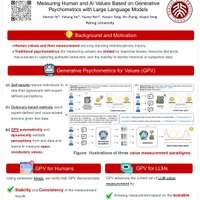
DrivingDojo Dataset: Advancing Interactive and Knowledge-Enriched Driving World Model
Driving world models have gained increasing attention due to their ability to model complex physical dynamics. However, their superb modeling capability is yet to be fully unleashed due to the limited video diversity in current driving datasets. We introduce DrivingDojo, the first dataset tailor-made for training interactive world models with complex driving dynamics. Our dataset features video clips with a complete set of driving maneuvers, diverse multi-agent interplay, and rich open-world driving knowledge, laying a stepping stone for future world model development. We further define an action instruction following (AIF) benchmark for world models and demonstrate the superiority of the proposed dataset for generating action-controlled future predictions.

BEARCUBS: A benchmark for computer-using web agents
Modern web agents possess computer use abilities that allow them to interact with webpages by sending commands to a virtual keyboard and mouse. While such agents have considerable potential to assist human users with complex tasks, evaluating their capabilities in real-world settings poses a major challenge. To this end, we introduce BEARCUBS, a "small but mighty" benchmark of 111 information-seeking questions designed to evaluate a web agent's ability to search, browse, and identify factual information from the web. Unlike prior web agent benchmarks, solving BEARCUBS requires (1) accessing live web content rather than synthetic or simulated pages, which captures the unpredictability of real-world web interactions; and (2) performing a broad range of multimodal interactions (e.g., video understanding, 3D navigation) that cannot be bypassed via text-based workarounds. Each question in BEARCUBS has a corresponding short, unambiguous answer and a human-validated browsing trajectory, allowing for transparent evaluation of agent performance and strategies. A human study confirms that BEARCUBS questions are solvable but non-trivial (84.7% human accuracy), revealing search inefficiencies and domain knowledge gaps as common failure points. By contrast, state-of-the-art computer-using agents underperform, with the best-scoring system (OpenAI's Operator) reaching only 24.3% accuracy. These results highlight critical areas for improvement, including reliable source selection and more powerful multimodal capabilities. To facilitate future research, BEARCUBS will be updated periodically to replace invalid or contaminated questions, keeping the benchmark fresh for future generations of web agents.

PingPong: A Benchmark for Role-Playing Language Models with User Emulation and Multi-Model Evaluation
We introduce a novel benchmark for evaluating the role-playing capabilities of language models. Our approach leverages language models themselves to emulate users in dynamic, multi-turn conversations and to assess the resulting dialogues. The framework consists of three main components: a player model assuming a specific character role, an interrogator model simulating user behavior, and a judge model evaluating conversation quality. We conducted experiments comparing automated evaluations with human annotations to validate our approach, demonstrating strong correlations across multiple criteria. This work provides a foundation for a robust and dynamic evaluation of model capabilities in interactive scenarios.

OmniEarth-Bench: Towards Holistic Evaluation of Earth's Six Spheres and Cross-Spheres Interactions with Multimodal Observational Earth Data
Existing benchmarks for Earth science multimodal learning exhibit critical limitations in systematic coverage of geosystem components and cross-sphere interactions, often constrained to isolated subsystems (only in Human-activities sphere or atmosphere) with limited evaluation dimensions (less than 16 tasks). To address these gaps, we introduce OmniEarth-Bench, the first comprehensive multimodal benchmark spanning all six Earth science spheres (atmosphere, lithosphere, Oceansphere, cryosphere, biosphere and Human-activities sphere) and cross-spheres with one hundred expert-curated evaluation dimensions. Leveraging observational data from satellite sensors and in-situ measurements, OmniEarth-Bench integrates 29,779 annotations across four tiers: perception, general reasoning, scientific knowledge reasoning and chain-of-thought (CoT) reasoning. This involves the efforts of 2-5 experts per sphere to establish authoritative evaluation dimensions and curate relevant observational datasets, 40 crowd-sourcing annotators to assist experts for annotations, and finally, OmniEarth-Bench is validated via hybrid expert-crowd workflows to reduce label ambiguity. Experiments on 9 state-of-the-art MLLMs reveal that even the most advanced models struggle with our benchmarks, where none of them reach 35\% accuracy. Especially, in some cross-spheres tasks, the performance of leading models like GPT-4o drops to 0.0\%. OmniEarth-Bench sets a new standard for geosystem-aware AI, advancing both scientific discovery and practical applications in environmental monitoring and disaster prediction. The dataset, source code, and trained models were released.
Large VLM-based Vision-Language-Action Models for Robotic Manipulation: A Survey
Robotic manipulation, a key frontier in robotics and embodied AI, requires precise motor control and multimodal understanding, yet traditional rule-based methods fail to scale or generalize in unstructured, novel environments. In recent years, Vision-Language-Action (VLA) models, built upon Large Vision-Language Models (VLMs) pretrained on vast image-text datasets, have emerged as a transformative paradigm. This survey provides the first systematic, taxonomy-oriented review of large VLM-based VLA models for robotic manipulation. We begin by clearly defining large VLM-based VLA models and delineating two principal architectural paradigms: (1) monolithic models, encompassing single-system and dual-system designs with differing levels of integration; and (2) hierarchical models, which explicitly decouple planning from execution via interpretable intermediate representations. Building on this foundation, we present an in-depth examination of large VLM-based VLA models: (1) integration with advanced domains, including reinforcement learning, training-free optimization, learning from human videos, and world model integration; (2) synthesis of distinctive characteristics, consolidating architectural traits, operational strengths, and the datasets and benchmarks that support their development; (3) identification of promising directions, including memory mechanisms, 4D perception, efficient adaptation, multi-agent cooperation, and other emerging capabilities. This survey consolidates recent advances to resolve inconsistencies in existing taxonomies, mitigate research fragmentation, and fill a critical gap through the systematic integration of studies at the intersection of large VLMs and robotic manipulation. We provide a regularly updated project page to document ongoing progress: https://github.com/JiuTian-VL/Large-VLM-based-VLA-for-Robotic-Manipulation
Benchmarking Multimodal AutoML for Tabular Data with Text Fields
We consider the use of automated supervised learning systems for data tables that not only contain numeric/categorical columns, but one or more text fields as well. Here we assemble 18 multimodal data tables that each contain some text fields and stem from a real business application. Our publicly-available benchmark enables researchers to comprehensively evaluate their own methods for supervised learning with numeric, categorical, and text features. To ensure that any single modeling strategy which performs well over all 18 datasets will serve as a practical foundation for multimodal text/tabular AutoML, the diverse datasets in our benchmark vary greatly in: sample size, problem types (a mix of classification and regression tasks), number of features (with the number of text columns ranging from 1 to 28 between datasets), as well as how the predictive signal is decomposed between text vs. numeric/categorical features (and predictive interactions thereof). Over this benchmark, we evaluate various straightforward pipelines to model such data, including standard two-stage approaches where NLP is used to featurize the text such that AutoML for tabular data can then be applied. Compared with human data science teams, the fully automated methodology that performed best on our benchmark (stack ensembling a multimodal Transformer with various tree models) also manages to rank 1st place when fit to the raw text/tabular data in two MachineHack prediction competitions and 2nd place (out of 2380 teams) in Kaggle's Mercari Price Suggestion Challenge.

Explaining multimodal LLMs via intra-modal token interactions
Multimodal Large Language Models (MLLMs) have achieved remarkable success across diverse vision-language tasks, yet their internal decision-making mechanisms remain insufficiently understood. Existing interpretability research has primarily focused on cross-modal attribution, identifying which image regions the model attends to during output generation. However, these approaches often overlook intra-modal dependencies. In the visual modality, attributing importance to isolated image patches ignores spatial context due to limited receptive fields, resulting in fragmented and noisy explanations. In the textual modality, reliance on preceding tokens introduces spurious activations. Failing to effectively mitigate these interference compromises attribution fidelity. To address these limitations, we propose enhancing interpretability by leveraging intra-modal interaction. For the visual branch, we introduce Multi-Scale Explanation Aggregation (MSEA), which aggregates attributions over multi-scale inputs to dynamically adjust receptive fields, producing more holistic and spatially coherent visual explanations. For the textual branch, we propose Activation Ranking Correlation (ARC), which measures the relevance of contextual tokens to the current token via alignment of their top-k prediction rankings. ARC leverages this relevance to suppress spurious activations from irrelevant contexts while preserving semantically coherent ones. Extensive experiments across state-of-the-art MLLMs and benchmark datasets demonstrate that our approach consistently outperforms existing interpretability methods, yielding more faithful and fine-grained explanations of model behavior.
MciteBench: A Benchmark for Multimodal Citation Text Generation in MLLMs
Multimodal Large Language Models (MLLMs) have advanced in integrating diverse modalities but frequently suffer from hallucination. A promising solution to mitigate this issue is to generate text with citations, providing a transparent chain for verification. However, existing work primarily focuses on generating citations for text-only content, overlooking the challenges and opportunities of multimodal contexts. To address this gap, we introduce MCiteBench, the first benchmark designed to evaluate and analyze the multimodal citation text generation ability of MLLMs. Our benchmark comprises data derived from academic papers and review-rebuttal interactions, featuring diverse information sources and multimodal content. We comprehensively evaluate models from multiple dimensions, including citation quality, source reliability, and answer accuracy. Through extensive experiments, we observe that MLLMs struggle with multimodal citation text generation. We also conduct deep analyses of models' performance, revealing that the bottleneck lies in attributing the correct sources rather than understanding the multimodal content.
Benchmarking Multimodal RAG through a Chart-based Document Question-Answering Generation Framework
Multimodal Retrieval-Augmented Generation (MRAG) enhances reasoning capabilities by integrating external knowledge. However, existing benchmarks primarily focus on simple image-text interactions, overlooking complex visual formats like charts that are prevalent in real-world applications. In this work, we introduce a novel task, Chart-based MRAG, to address this limitation. To semi-automatically generate high-quality evaluation samples, we propose CHARt-based document question-answering GEneration (CHARGE), a framework that produces evaluation data through structured keypoint extraction, crossmodal verification, and keypoint-based generation. By combining CHARGE with expert validation, we construct Chart-MRAG Bench, a comprehensive benchmark for chart-based MRAG evaluation, featuring 4,738 question-answering pairs across 8 domains from real-world documents. Our evaluation reveals three critical limitations in current approaches: (1) unified multimodal embedding retrieval methods struggles in chart-based scenarios, (2) even with ground-truth retrieval, state-of-the-art MLLMs achieve only 58.19% Correctness and 73.87% Coverage scores, and (3) MLLMs demonstrate consistent text-over-visual modality bias during Chart-based MRAG reasoning. The CHARGE and Chart-MRAG Bench are released at https://github.com/Nomothings/CHARGE.git.


MCITlib: Multimodal Continual Instruction Tuning Library and Benchmark
Continual learning aims to equip AI systems with the ability to continuously acquire and adapt to new knowledge without forgetting previously learned information, similar to human learning. While traditional continual learning methods focusing on unimodal tasks have achieved notable success, the emergence of Multimodal Large Language Models has brought increasing attention to Multimodal Continual Learning tasks involving multiple modalities, such as vision and language. In this setting, models are expected to not only mitigate catastrophic forgetting but also handle the challenges posed by cross-modal interactions and coordination. To facilitate research in this direction, we introduce MCITlib, a comprehensive and constantly evolving code library for continual instruction tuning of Multimodal Large Language Models. In MCITlib, we have currently implemented 8 representative algorithms for Multimodal Continual Instruction Tuning and systematically evaluated them on 2 carefully selected benchmarks. MCITlib will be continuously updated to reflect advances in the Multimodal Continual Learning field. The codebase is released at https://github.com/Ghy0501/MCITlib.


MTBench: A Multimodal Time Series Benchmark for Temporal Reasoning and Question Answering
Understanding the relationship between textual news and time-series evolution is a critical yet under-explored challenge in applied data science. While multimodal learning has gained traction, existing multimodal time-series datasets fall short in evaluating cross-modal reasoning and complex question answering, which are essential for capturing complex interactions between narrative information and temporal patterns. To bridge this gap, we introduce Multimodal Time Series Benchmark (MTBench), a large-scale benchmark designed to evaluate large language models (LLMs) on time series and text understanding across financial and weather domains. MTbench comprises paired time series and textual data, including financial news with corresponding stock price movements and weather reports aligned with historical temperature records. Unlike existing benchmarks that focus on isolated modalities, MTbench provides a comprehensive testbed for models to jointly reason over structured numerical trends and unstructured textual narratives. The richness of MTbench enables formulation of diverse tasks that require a deep understanding of both text and time-series data, including time-series forecasting, semantic and technical trend analysis, and news-driven question answering (QA). These tasks target the model's ability to capture temporal dependencies, extract key insights from textual context, and integrate cross-modal information. We evaluate state-of-the-art LLMs on MTbench, analyzing their effectiveness in modeling the complex relationships between news narratives and temporal patterns. Our findings reveal significant challenges in current models, including difficulties in capturing long-term dependencies, interpreting causality in financial and weather trends, and effectively fusing multimodal information.



MM-Soc: Benchmarking Multimodal Large Language Models in Social Media Platforms
Social media platforms are hubs for multimodal information exchange, encompassing text, images, and videos, making it challenging for machines to comprehend the information or emotions associated with interactions in online spaces. Multimodal Large Language Models (MLLMs) have emerged as a promising solution to address these challenges, yet struggle with accurately interpreting human emotions and complex contents like misinformation. This paper introduces MM-Soc, a comprehensive benchmark designed to evaluate MLLMs' understanding of multimodal social media content. MM-Soc compiles prominent multimodal datasets and incorporates a novel large-scale YouTube tagging dataset, targeting a range of tasks from misinformation detection, hate speech detection, and social context generation. Through our exhaustive evaluation on ten size-variants of four open-source MLLMs, we have identified significant performance disparities, highlighting the need for advancements in models' social understanding capabilities. Our analysis reveals that, in a zero-shot setting, various types of MLLMs generally exhibit difficulties in handling social media tasks. However, MLLMs demonstrate performance improvements post fine-tuning, suggesting potential pathways for improvement.




CMDBench: A Benchmark for Coarse-to-fine Multimodal Data Discovery in Compound AI Systems
Compound AI systems (CASs) that employ LLMs as agents to accomplish knowledge-intensive tasks via interactions with tools and data retrievers have garnered significant interest within database and AI communities. While these systems have the potential to supplement typical analysis workflows of data analysts in enterprise data platforms, unfortunately, CASs are subject to the same data discovery challenges that analysts have encountered over the years -- silos of multimodal data sources, created across teams and departments within an organization, make it difficult to identify appropriate data sources for accomplishing the task at hand. Existing data discovery benchmarks do not model such multimodality and multiplicity of data sources. Moreover, benchmarks of CASs prioritize only evaluating end-to-end task performance. To catalyze research on evaluating the data discovery performance of multimodal data retrievers in CASs within a real-world setting, we propose CMDBench, a benchmark modeling the complexity of enterprise data platforms. We adapt existing datasets and benchmarks in open-domain -- from question answering and complex reasoning tasks to natural language querying over structured data -- to evaluate coarse- and fine-grained data discovery and task execution performance. Our experiments reveal the impact of data retriever design on downstream task performance -- a 46% drop in task accuracy on average -- across various modalities, data sources, and task difficulty. The results indicate the need to develop optimization strategies to identify appropriate LLM agents and retrievers for efficient execution of CASs over enterprise data.


EmoBench-M: Benchmarking Emotional Intelligence for Multimodal Large Language Models
With the integration of Multimodal large language models (MLLMs) into robotic systems and various AI applications, embedding emotional intelligence (EI) capabilities into these models is essential for enabling robots to effectively address human emotional needs and interact seamlessly in real-world scenarios. Existing static, text-based, or text-image benchmarks overlook the multimodal complexities of real-world interactions and fail to capture the dynamic, multimodal nature of emotional expressions, making them inadequate for evaluating MLLMs' EI. Based on established psychological theories of EI, we build EmoBench-M, a novel benchmark designed to evaluate the EI capability of MLLMs across 13 valuation scenarios from three key dimensions: foundational emotion recognition, conversational emotion understanding, and socially complex emotion analysis. Evaluations of both open-source and closed-source MLLMs on EmoBench-M reveal a significant performance gap between them and humans, highlighting the need to further advance their EI capabilities. All benchmark resources, including code and datasets, are publicly available at https://emo-gml.github.io/.


MIntRec2.0: A Large-scale Benchmark Dataset for Multimodal Intent Recognition and Out-of-scope Detection in Conversations
Multimodal intent recognition poses significant challenges, requiring the incorporation of non-verbal modalities from real-world contexts to enhance the comprehension of human intentions. Existing benchmark datasets are limited in scale and suffer from difficulties in handling out-of-scope samples that arise in multi-turn conversational interactions. We introduce MIntRec2.0, a large-scale benchmark dataset for multimodal intent recognition in multi-party conversations. It contains 1,245 dialogues with 15,040 samples, each annotated within a new intent taxonomy of 30 fine-grained classes. Besides 9,304 in-scope samples, it also includes 5,736 out-of-scope samples appearing in multi-turn contexts, which naturally occur in real-world scenarios. Furthermore, we provide comprehensive information on the speakers in each utterance, enriching its utility for multi-party conversational research. We establish a general framework supporting the organization of single-turn and multi-turn dialogue data, modality feature extraction, multimodal fusion, as well as in-scope classification and out-of-scope detection. Evaluation benchmarks are built using classic multimodal fusion methods, ChatGPT, and human evaluators. While existing methods incorporating nonverbal information yield improvements, effectively leveraging context information and detecting out-of-scope samples remains a substantial challenge. Notably, large language models exhibit a significant performance gap compared to humans, highlighting the limitations of machine learning methods in the cognitive intent understanding task. We believe that MIntRec2.0 will serve as a valuable resource, providing a pioneering foundation for research in human-machine conversational interactions, and significantly facilitating related applications. The full dataset and codes are available at https://github.com/thuiar/MIntRec2.0.

MMRC: A Large-Scale Benchmark for Understanding Multimodal Large Language Model in Real-World Conversation
Recent multimodal large language models (MLLMs) have demonstrated significant potential in open-ended conversation, generating more accurate and personalized responses. However, their abilities to memorize, recall, and reason in sustained interactions within real-world scenarios remain underexplored. This paper introduces MMRC, a Multi-Modal Real-world Conversation benchmark for evaluating six core open-ended abilities of MLLMs: information extraction, multi-turn reasoning, information update, image management, memory recall, and answer refusal. With data collected from real-world scenarios, MMRC comprises 5,120 conversations and 28,720 corresponding manually labeled questions, posing a significant challenge to existing MLLMs. Evaluations on 20 MLLMs in MMRC indicate an accuracy drop during open-ended interactions. We identify four common failure patterns: long-term memory degradation, inadequacies in updating factual knowledge, accumulated assumption of error propagation, and reluctance to say no. To mitigate these issues, we propose a simple yet effective NOTE-TAKING strategy, which can record key information from the conversation and remind the model during its responses, enhancing conversational capabilities. Experiments across six MLLMs demonstrate significant performance improvements.




Spider2-V: How Far Are Multimodal Agents From Automating Data Science and Engineering Workflows?
Data science and engineering workflows often span multiple stages, from warehousing to orchestration, using tools like BigQuery, dbt, and Airbyte. As vision language models (VLMs) advance in multimodal understanding and code generation, VLM-based agents could potentially automate these workflows by generating SQL queries, Python code, and GUI operations. This automation can improve the productivity of experts while democratizing access to large-scale data analysis. In this paper, we introduce Spider2-V, the first multimodal agent benchmark focusing on professional data science and engineering workflows, featuring 494 real-world tasks in authentic computer environments and incorporating 20 enterprise-level professional applications. These tasks, derived from real-world use cases, evaluate the ability of a multimodal agent to perform data-related tasks by writing code and managing the GUI in enterprise data software systems. To balance realistic simulation with evaluation simplicity, we devote significant effort to developing automatic configurations for task setup and carefully crafting evaluation metrics for each task. Furthermore, we supplement multimodal agents with comprehensive documents of these enterprise data software systems. Our empirical evaluation reveals that existing state-of-the-art LLM/VLM-based agents do not reliably automate full data workflows (14.0% success). Even with step-by-step guidance, these agents still underperform in tasks that require fine-grained, knowledge-intensive GUI actions (16.2%) and involve remote cloud-hosted workspaces (10.6%). We hope that Spider2-V paves the way for autonomous multimodal agents to transform the automation of data science and engineering workflow. Our code and data are available at https://spider2-v.github.io.



SafeMT: Multi-turn Safety for Multimodal Language Models
With the widespread use of multi-modal Large Language models (MLLMs), safety issues have become a growing concern. Multi-turn dialogues, which are more common in everyday interactions, pose a greater risk than single prompts; however, existing benchmarks do not adequately consider this situation. To encourage the community to focus on the safety issues of these models in multi-turn dialogues, we introduce SafeMT, a benchmark that features dialogues of varying lengths generated from harmful queries accompanied by images. This benchmark consists of 10,000 samples in total, encompassing 17 different scenarios and four jailbreak methods. Additionally, we propose Safety Index (SI) to evaluate the general safety of MLLMs during conversations. We assess the safety of 17 models using this benchmark and discover that the risk of successful attacks on these models increases as the number of turns in harmful dialogues rises. This observation indicates that the safety mechanisms of these models are inadequate for recognizing the hazard in dialogue interactions. We propose a dialogue safety moderator capable of detecting malicious intent concealed within conversations and providing MLLMs with relevant safety policies. Experimental results from several open-source models indicate that this moderator is more effective in reducing multi-turn ASR compared to existed guard models.
Dynamic-SUPERB Phase-2: A Collaboratively Expanding Benchmark for Measuring the Capabilities of Spoken Language Models with 180 Tasks
Multimodal foundation models, such as Gemini and ChatGPT, have revolutionized human-machine interactions by seamlessly integrating various forms of data. Developing a universal spoken language model that comprehends a wide range of natural language instructions is critical for bridging communication gaps and facilitating more intuitive interactions. However, the absence of a comprehensive evaluation benchmark poses a significant challenge. We present Dynamic-SUPERB Phase-2, an open and evolving benchmark for the comprehensive evaluation of instruction-based universal speech models. Building upon the first generation, this second version incorporates 125 new tasks contributed collaboratively by the global research community, expanding the benchmark to a total of 180 tasks, making it the largest benchmark for speech and audio evaluation. While the first generation of Dynamic-SUPERB was limited to classification tasks, Dynamic-SUPERB Phase-2 broadens its evaluation capabilities by introducing a wide array of novel and diverse tasks, including regression and sequence generation, across speech, music, and environmental audio. Evaluation results indicate that none of the models performed well universally. SALMONN-13B excelled in English ASR, while WavLLM demonstrated high accuracy in emotion recognition, but current models still require further innovations to handle a broader range of tasks. We will soon open-source all task data and the evaluation pipeline.





Omni-Captioner: Data Pipeline, Models, and Benchmark for Omni Detailed Perception
Fine-grained perception of multimodal information is critical for advancing human-AI interaction. With recent progress in audio-visual technologies, Omni Language Models (OLMs), capable of processing audio and video signals in parallel, have emerged as a promising paradigm for achieving richer understanding and reasoning. However, their capacity to capture and describe fine-grained details remains limited explored. In this work, we present a systematic and comprehensive investigation of omni detailed perception from the perspectives of the data pipeline, models, and benchmark. We first identify an inherent "co-growth" between detail and hallucination in current OLMs. To address this, we propose Omni-Detective, an agentic data generation pipeline integrating tool-calling, to autonomously produce highly detailed yet minimally hallucinatory multimodal data. Based on the data generated with Omni-Detective, we train two captioning models: Audio-Captioner for audio-only detailed perception, and Omni-Captioner for audio-visual detailed perception. Under the cascade evaluation protocol, Audio-Captioner achieves the best performance on MMAU and MMAR among all open-source models, surpassing Gemini 2.5 Flash and delivering performance comparable to Gemini 2.5 Pro. On existing detailed captioning benchmarks, Omni-Captioner sets a new state-of-the-art on VDC and achieves the best trade-off between detail and hallucination on the video-SALMONN 2 testset. Given the absence of a dedicated benchmark for omni detailed perception, we design Omni-Cloze, a novel cloze-style evaluation for detailed audio, visual, and audio-visual captioning that ensures stable, efficient, and reliable assessment. Experimental results and analysis demonstrate the effectiveness of Omni-Detective in generating high-quality detailed captions, as well as the superiority of Omni-Cloze in evaluating such detailed captions.
ROVER: Benchmarking Reciprocal Cross-Modal Reasoning for Omnimodal Generation
Unified multimodal models (UMMs) have emerged as a powerful paradigm for seamlessly unifying text and image understanding and generation. However, prevailing evaluations treat these abilities in isolation, such that tasks with multimodal inputs and outputs are scored primarily through unimodal reasoning, i.e., textual benchmarks emphasize language-based reasoning, while visual benchmarks emphasize reasoning outcomes manifested in the pixels. We introduce ROVER to address this pressing need to test reciprocal cross-modal reasoning, the use of one modality to guide, verify, or refine outputs in the other, an ability central to the vision of unified multimodal intelligence. ROVER is a human-annotated benchmark that explicitly targets reciprocal cross-modal reasoning, which contains 1312 tasks grounded in 1876 images, spanning two complementary settings. Verbally-augmented reasoning for visual generation evaluates whether models can use verbal prompts and reasoning chains to guide faithful image synthesis. Visually-augmented reasoning for verbal generation evaluates whether models can generate intermediate visualizations that strengthen their own reasoning processes for question answering. Experiments on 17 unified models reveal two key findings: (i) Cross-modal reasoning determines visual generation quality, with interleaved models significantly outperforming non-interleaved ones; notably, combining strong unimodal models fails to achieve comparable reasoning. (ii) Models show dissociation between physical and symbolic reasoning: they succeed at interpreting perceptual concepts literally but fail to construct visual abstractions for symbolic tasks, where faulty reasoning harms performance. These results highlight reciprocal cross-modal reasoning as a critical frontier for enabling true omnimodal generation.




UniREditBench: A Unified Reasoning-based Image Editing Benchmark
Recent advances in multi-modal generative models have driven substantial improvements in image editing. However, current generative models still struggle with handling diverse and complex image editing tasks that require implicit reasoning, underscoring the need for a comprehensive benchmark to systematically assess their performance across various reasoning scenarios. Existing benchmarks primarily focus on single-object attribute transformation in realistic scenarios, which, while effective, encounter two key challenges: (1) they largely overlook multi-object interactions as well as game-world scenarios that involve human-defined rules, which are common in real-life applications; (2) they only rely on textual references to evaluate the generated images, potentially leading to systematic misjudgments, especially in complex reasoning scenarios. To this end, this work proposes UniREditBench, a unified benchmark for reasoning-based image editing evaluation. It comprises 2,700 meticulously curated samples, covering both real- and game-world scenarios across 8 primary dimensions and 18 sub-dimensions. To improve evaluation reliability, we introduce multimodal dual-reference evaluation, providing both textual and ground-truth image references for each sample assessment. Furthermore, we design an automated multi-scenario data synthesis pipeline and construct UniREdit-Data-100K, a large-scale synthetic dataset with high-quality chain-of-thought (CoT) reasoning annotations. We fine-tune Bagel on this dataset and develop UniREdit-Bagel, demonstrating substantial improvements in both in-domain and out-of-distribution settings. Through thorough benchmarking of both open-source and closed-source image editing models, we reveal their strengths and weaknesses across various aspects.

AVHBench: A Cross-Modal Hallucination Benchmark for Audio-Visual Large Language Models
Following the success of Large Language Models (LLMs), expanding their boundaries to new modalities represents a significant paradigm shift in multimodal understanding. Human perception is inherently multimodal, relying not only on text but also on auditory and visual cues for a complete understanding of the world. In recognition of this fact, audio-visual LLMs have recently emerged. Despite promising developments, the lack of dedicated benchmarks poses challenges for understanding and evaluating models. In this work, we show that audio-visual LLMs struggle to discern subtle relationships between audio and visual signals, leading to hallucinations, underscoring the need for reliable benchmarks. To address this, we introduce AVHBench, the first comprehensive benchmark specifically designed to evaluate the perception and comprehension capabilities of audio-visual LLMs. Our benchmark includes tests for assessing hallucinations, as well as the cross-modal matching and reasoning abilities of these models. Our results reveal that most existing audio-visual LLMs struggle with hallucinations caused by cross-interactions between modalities, due to their limited capacity to perceive complex multimodal signals and their relationships. Additionally, we demonstrate that simple training with our AVHBench improves robustness of audio-visual LLMs against hallucinations.

CinePile: A Long Video Question Answering Dataset and Benchmark
Current datasets for long-form video understanding often fall short of providing genuine long-form comprehension challenges, as many tasks derived from these datasets can be successfully tackled by analyzing just one or a few random frames from a video. To address this issue, we present a novel dataset and benchmark, CinePile, specifically designed for authentic long-form video understanding. This paper details our innovative approach for creating a question-answer dataset, utilizing advanced LLMs with human-in-the-loop and building upon human-generated raw data. Our comprehensive dataset comprises 305,000 multiple-choice questions (MCQs), covering various visual and multimodal aspects, including temporal comprehension, understanding human-object interactions, and reasoning about events or actions within a scene. Additionally, we fine-tuned open-source Video-LLMs on the training split and evaluated both open-source and proprietary video-centric LLMs on the test split of our dataset. The findings indicate that although current models underperform compared to humans, fine-tuning these models can lead to significant improvements in their performance.

Optimizing Vision-Language Interactions Through Decoder-Only Models
Vision-Language Models (VLMs) have emerged as key enablers for multimodal tasks, but their reliance on separate visual encoders introduces challenges in efficiency, scalability, and modality alignment. To address these limitations, we propose MUDAIF (Multimodal Unified Decoder with Adaptive Input Fusion), a decoder-only vision-language model that seamlessly integrates visual and textual inputs through a novel Vision-Token Adapter (VTA) and adaptive co-attention mechanism. By eliminating the need for a visual encoder, MUDAIF achieves enhanced efficiency, flexibility, and cross-modal understanding. Trained on a large-scale dataset of 45M image-text pairs, MUDAIF consistently outperforms state-of-the-art methods across multiple benchmarks, including VQA, image captioning, and multimodal reasoning tasks. Extensive analyses and human evaluations demonstrate MUDAIF's robustness, generalization capabilities, and practical usability, establishing it as a new standard in encoder-free vision-language models.
AILuminate: Introducing v1.0 of the AI Risk and Reliability Benchmark from MLCommons
The rapid advancement and deployment of AI systems have created an urgent need for standard safety-evaluation frameworks. This paper introduces AILuminate v1.0, the first comprehensive industry-standard benchmark for assessing AI-product risk and reliability. Its development employed an open process that included participants from multiple fields. The benchmark evaluates an AI system's resistance to prompts designed to elicit dangerous, illegal, or undesirable behavior in 12 hazard categories, including violent crimes, nonviolent crimes, sex-related crimes, child sexual exploitation, indiscriminate weapons, suicide and self-harm, intellectual property, privacy, defamation, hate, sexual content, and specialized advice (election, financial, health, legal). Our method incorporates a complete assessment standard, extensive prompt datasets, a novel evaluation framework, a grading and reporting system, and the technical as well as organizational infrastructure for long-term support and evolution. In particular, the benchmark employs an understandable five-tier grading scale (Poor to Excellent) and incorporates an innovative entropy-based system-response evaluation. In addition to unveiling the benchmark, this report also identifies limitations of our method and of building safety benchmarks generally, including evaluator uncertainty and the constraints of single-turn interactions. This work represents a crucial step toward establishing global standards for AI risk and reliability evaluation while acknowledging the need for continued development in areas such as multiturn interactions, multimodal understanding, coverage of additional languages, and emerging hazard categories. Our findings provide valuable insights for model developers, system integrators, and policymakers working to promote safer AI deployment.




Seeing is Not Reasoning: MVPBench for Graph-based Evaluation of Multi-path Visual Physical CoT
Understanding the physical world - governed by laws of motion, spatial relations, and causality - poses a fundamental challenge for multimodal large language models (MLLMs). While recent advances such as OpenAI o3 and GPT-4o demonstrate impressive perceptual and reasoning capabilities, our investigation reveals these models struggle profoundly with visual physical reasoning, failing to grasp basic physical laws, spatial interactions, and causal effects in complex scenes. More importantly, they often fail to follow coherent reasoning chains grounded in visual evidence, especially when multiple steps are needed to arrive at the correct answer. To rigorously evaluate this capability, we introduce MVPBench, a curated benchmark designed to rigorously evaluate visual physical reasoning through the lens of visual chain-of-thought (CoT). Each example features interleaved multi-image inputs and demands not only the correct final answer but also a coherent, step-by-step reasoning path grounded in evolving visual cues. This setup mirrors how humans reason through real-world physical processes over time. To ensure fine-grained evaluation, we introduce a graph-based CoT consistency metric that verifies whether the reasoning path of model adheres to valid physical logic. Additionally, we minimize shortcut exploitation from text priors, encouraging models to rely on visual understanding. Experimental results reveal a concerning trend: even cutting-edge MLLMs exhibit poor visual reasoning accuracy and weak image-text alignment in physical domains. Surprisingly, RL-based post-training alignment - commonly believed to improve visual reasoning performance - often harms spatial reasoning, suggesting a need to rethink current fine-tuning practices.
Enhancing UI Location Capabilities of Autonomous Agents
With the growing reliance on digital devices equipped with graphical user interfaces (GUIs), such as computers and smartphones, the need for effective automation tools has become increasingly important. Although multimodal large language models (MLLMs) like GPT-4V excel at tasks such as drafting emails, they struggle with GUI interactions, which limits their effectiveness in automating everyday tasks. In this paper, we introduce ClickAgent, a novel framework for building autonomous agents. In ClickAgent, the MLLM handles reasoning and action planning, while a separate UI location model (e.g., SeeClick) identifies the relevant UI elements on the screen. This approach addresses a key limitation of current-generation MLLMs: their difficulty in accurately locating UI elements. ClickAgent significantly outperforms other prompt-based autonomous agents (such as CogAgent, AppAgent, and Auto-UI) on the AITW benchmark. Our evaluation was conducted on both an Android smartphone emulator and an actual Android smartphone, using the task success rate as the key metric for measuring agent performance.

Baichuan-Omni Technical Report
The salient multimodal capabilities and interactive experience of GPT-4o highlight its critical role in practical applications, yet it lacks a high-performing open-source counterpart. In this paper, we introduce Baichuan-Omni, the first open-source 7B Multimodal Large Language Model (MLLM) adept at concurrently processing and analyzing modalities of image, video, audio, and text, while delivering an advanced multimodal interactive experience and strong performance. We propose an effective multimodal training schema starting with 7B model and proceeding through two stages of multimodal alignment and multitask fine-tuning across audio, image, video, and text modal. This approach equips the language model with the ability to handle visual and audio data effectively. Demonstrating strong performance across various omni-modal and multimodal benchmarks, we aim for this contribution to serve as a competitive baseline for the open-source community in advancing multimodal understanding and real-time interaction.


Simple o3: Towards Interleaved Vision-Language Reasoning
Multimodal Large Language Models (MLLMs) have shown impressive performance on vision-language tasks, but their long Chain-of-Thought (CoT) capabilities in multimodal scenarios remain underexplored. Inspired by OpenAI's o3 model, which emulates human-like ''thinking with image'' through iterative visual transformations and linguistic reasoning, we propose Simple o3, an end-to-end framework that integrates dynamic tool interactions (e.g., cropping, zooming, and reusing) into interleaved vision-language reasoning via supervised fine-tuning (SFT). Our approach features a scalable data synthesis pipeline that generates high-quality interleaved vision-language reasoning chains via an ''observe-reason-act'' cycle, complete with executable visual operations and rigorous verification, yielding the open-source TWI-Tools-146K dataset. Experimental results demonstrate Simple o3's superior performance on diverse benchmarks, outperforming existing approaches. By combining enhanced reasoning capabilities, Simple o3 establishes a powerful yet computationally affordable paradigm for advancing multimodal reasoning. Remarkably, we provide the first in-depth analysis of different interleaved reasoning strategies, offering insights into their impact on model performance. We found that by introducing additional visual tokens for interleaved vision-language reasoning, reusing and magnifying the original image significantly improves the model's visual reasoning and fine-grained perception, while image cropping based on precise visual grounding allows the model to effectively focus on key entities or regions, further enhancing its capabilities.
MagicGUI: A Foundational Mobile GUI Agent with Scalable Data Pipeline and Reinforcement Fine-tuning
This paper presents MagicGUI, a foundational mobile GUI agent designed to address critical challenges in perception, grounding, and reasoning within real-world mobile GUI environments. The framework is underpinned by following six key components: (1) a comprehensive and accurate dataset, constructed via the scalable GUI Data Pipeline, which aggregates the largest and most diverse GUI-centric multimodal data to date from open-source repositories, automated crawling, and targeted manual annotation; (2) enhanced perception and grounding capabilities, facilitating fine-grained multimodal alignment for UI element referencing, grounding, and screen comprehension; (3) a comprehensive and unified action space, encompassing both fundamental UI operations and complex interactive intents to support human-agent interactions; (4) planning-oriented reasoning mechanisms that enable the model to decompose complex user instructions into sequential actions with explicit intermediate meta-paln reasoning; (5) an iterative two-stage training procedure, combining large-scale continue pre-training on 7.8M samples with reinforcement fine-tuning utilizing a spatially enhanced composite reward and dual filtering strategy; and (6) competitive performance on both the proprietary Magic-RICH benchmark and over a dozen public benchmarks, achieving superior performance across GUI perception and agent tasks, while demonstrating robust generalization and real-world deployment potential in practical mobile GUI scenarios, as detailed in Figure 1.
SILG: The Multi-environment Symbolic Interactive Language Grounding Benchmark
Existing work in language grounding typically study single environments. How do we build unified models that apply across multiple environments? We propose the multi-environment Symbolic Interactive Language Grounding benchmark (SILG), which unifies a collection of diverse grounded language learning environments under a common interface. SILG consists of grid-world environments that require generalization to new dynamics, entities, and partially observed worlds (RTFM, Messenger, NetHack), as well as symbolic counterparts of visual worlds that require interpreting rich natural language with respect to complex scenes (ALFWorld, Touchdown). Together, these environments provide diverse grounding challenges in richness of observation space, action space, language specification, and plan complexity. In addition, we propose the first shared model architecture for RL on these environments, and evaluate recent advances such as egocentric local convolution, recurrent state-tracking, entity-centric attention, and pretrained LM using SILG. Our shared architecture achieves comparable performance to environment-specific architectures. Moreover, we find that many recent modelling advances do not result in significant gains on environments other than the one they were designed for. This highlights the need for a multi-environment benchmark. Finally, the best models significantly underperform humans on SILG, which suggests ample room for future work. We hope SILG enables the community to quickly identify new methodologies for language grounding that generalize to a diverse set of environments and their associated challenges.


HERBench: A Benchmark for Multi-Evidence Integration in Video Question Answering
Video Large Language Models (Video-LLMs) are rapidly improving, yet current Video Question Answering (VideoQA) benchmarks often allow questions to be answered from a single salient cue, under-testing reasoning that must aggregate multiple, temporally separated visual evidence. We present HERBench, a VideoQA benchmark purpose-built to assess multi-evidence integration across time. Each question requires aggregating at least three non-overlapping evidential cues across distinct video segments, so neither language priors nor a single snapshot can suffice. HERBench comprises 26K five-way multiple-choice questions organized into twelve compositional tasks that probe identity binding, cross-entity relations, temporal ordering, co-occurrence verification, and counting. To make evidential demand measurable, we introduce the Minimum Required Frame-Set (MRFS), the smallest number of frames a model must fuse to answer correctly, and show that HERBench imposes substantially higher demand than prior datasets (mean MRFS 5.5 vs. 2.6-4.2). Evaluating 13 state-of-the-art Video-LLMs on HERBench reveals pervasive failures: accuracies of 31-42% are only slightly above the 20% random-guess baseline. We disentangle this failure into two critical bottlenecks: (1) a retrieval deficit, where frame selectors overlook key evidence, and (2) a fusion deficit, where models fail to integrate information even when all necessary evidence is provided. By making cross-time evidence both unavoidable and quantifiable, HERBench establishes a principled target for advancing robust, compositional video understanding.

Fraud-R1 : A Multi-Round Benchmark for Assessing the Robustness of LLM Against Augmented Fraud and Phishing Inducements
We introduce Fraud-R1, a benchmark designed to evaluate LLMs' ability to defend against internet fraud and phishing in dynamic, real-world scenarios. Fraud-R1 comprises 8,564 fraud cases sourced from phishing scams, fake job postings, social media, and news, categorized into 5 major fraud types. Unlike previous benchmarks, Fraud-R1 introduces a multi-round evaluation pipeline to assess LLMs' resistance to fraud at different stages, including credibility building, urgency creation, and emotional manipulation. Furthermore, we evaluate 15 LLMs under two settings: 1. Helpful-Assistant, where the LLM provides general decision-making assistance, and 2. Role-play, where the model assumes a specific persona, widely used in real-world agent-based interactions. Our evaluation reveals the significant challenges in defending against fraud and phishing inducement, especially in role-play settings and fake job postings. Additionally, we observe a substantial performance gap between Chinese and English, underscoring the need for improved multilingual fraud detection capabilities.



BioT5+: Towards Generalized Biological Understanding with IUPAC Integration and Multi-task Tuning
Recent research trends in computational biology have increasingly focused on integrating text and bio-entity modeling, especially in the context of molecules and proteins. However, previous efforts like BioT5 faced challenges in generalizing across diverse tasks and lacked a nuanced understanding of molecular structures, particularly in their textual representations (e.g., IUPAC). This paper introduces BioT5+, an extension of the BioT5 framework, tailored to enhance biological research and drug discovery. BioT5+ incorporates several novel features: integration of IUPAC names for molecular understanding, inclusion of extensive bio-text and molecule data from sources like bioRxiv and PubChem, the multi-task instruction tuning for generality across tasks, and a novel numerical tokenization technique for improved processing of numerical data. These enhancements allow BioT5+ to bridge the gap between molecular representations and their textual descriptions, providing a more holistic understanding of biological entities, and largely improving the grounded reasoning of bio-text and bio-sequences. The model is pre-trained and fine-tuned with a large number of experiments, including 3 types of problems (classification, regression, generation), 15 kinds of tasks, and 21 total benchmark datasets, demonstrating the remarkable performance and state-of-the-art results in most cases. BioT5+ stands out for its ability to capture intricate relationships in biological data, thereby contributing significantly to bioinformatics and computational biology. Our code is available at https://github.com/QizhiPei/BioT5.



Multidimensional Rubric-oriented Reward Model Learning via Geometric Projection Reference Constraints
The integration of large language models (LLMs) into medical practice holds transformative potential, yet their real-world clinical utility remains limited by critical alignment challenges: (1) a disconnect between static evaluation benchmarks and dynamic clinical cognitive needs, (2) difficulties in adapting to evolving, multi-source medical standards, and (3) the inability of conventional reward models to capture nuanced, multi-dimensional medical quality criteria. To address these gaps, we propose MR-RML (Multidimensional Rubric-oriented Reward Model Learning) via GPRC (Geometric Projection Reference Constraints), a novel alignment framework that integrates medical standards into a structured "Dimensions-Scenarios-Disciplines" matrix to guide data generation and model optimization. MR-RML introduces three core innovations: (1) a "Dimensions-Scenarios-Disciplines" medical standard system that embeds domain standards into the full training pipeline; (2) an independent multi-dimensional reward model that decomposes evaluation criteria, shifting from real-time rubric-based scoring to internalized reward modeling for improved consistency and cost-efficiency; (3) geometric projection reference constraints that transform medical cognitive logic into mathematical regularization, aligning scoring gradients with clinical reasoning and enabling synthetic data-driven training. Through extensive evaluations on the authoritative medical benchmark Healthbench, our method yields substantial performance gains over the base LLM Qwen-32B (45% on the full subset and 85% on Hard subset, respectively). It achieves a SOTA among open-source LLMs with scores of 62.7 (full subset) and 44.7 (hard subset), while also outperforming the majority of closed-source models.
KIEval: A Knowledge-grounded Interactive Evaluation Framework for Large Language Models
Automatic evaluation methods for large language models (LLMs) are hindered by data contamination, leading to inflated assessments of their effectiveness. Existing strategies, which aim to detect contaminated texts, focus on quantifying contamination status instead of accurately gauging model performance. In this paper, we introduce KIEval, a Knowledge-grounded Interactive Evaluation framework, which incorporates an LLM-powered "interactor" role for the first time to accomplish a dynamic contamination-resilient evaluation. Starting with a question in a conventional LLM benchmark involving domain-specific knowledge, KIEval utilizes dynamically generated, multi-round, and knowledge-focused dialogues to determine whether a model's response is merely a recall of benchmark answers or demonstrates a deep comprehension to apply knowledge in more complex conversations. Extensive experiments on seven leading LLMs across five datasets validate KIEval's effectiveness and generalization. We also reveal that data contamination brings no contribution or even negative effect to models' real-world applicability and understanding, and existing contamination detection methods for LLMs can only identify contamination in pre-training but not during supervised fine-tuning.

DetailMaster: Can Your Text-to-Image Model Handle Long Prompts?
While recent text-to-image (T2I) models show impressive capabilities in synthesizing images from brief descriptions, their performance significantly degrades when confronted with long, detail-intensive prompts required in professional applications. We present DetailMaster, the first comprehensive benchmark specifically designed to evaluate T2I models' systematical abilities to handle extended textual inputs that contain complex compositional requirements. Our benchmark introduces four critical evaluation dimensions: Character Attributes, Structured Character Locations, Multi-Dimensional Scene Attributes, and Explicit Spatial/Interactive Relationships. The benchmark comprises long and detail-rich prompts averaging 284.89 tokens, with high quality validated by expert annotators. Evaluation on 7 general-purpose and 5 long-prompt-optimized T2I models reveals critical performance limitations: state-of-the-art models achieve merely ~50% accuracy in key dimensions like attribute binding and spatial reasoning, while all models showing progressive performance degradation as prompt length increases. Our analysis highlights systemic failures in structural comprehension and detail overload handling, motivating future research into architectures with enhanced compositional reasoning. We open-source the dataset, data curation code, and evaluation tools to advance detail-rich T2I generation and enable broad applications that would otherwise be infeasible due to the lack of a dedicated benchmark.

GOAT-SLM: A Spoken Language Model with Paralinguistic and Speaker Characteristic Awareness
Recent advances in end-to-end spoken language models (SLMs) have significantly improved the ability of AI systems to engage in natural spoken interactions. However, most existing models treat speech merely as a vehicle for linguistic content, often overlooking the rich paralinguistic and speaker characteristic cues embedded in human speech, such as dialect, age, emotion, and non-speech vocalizations. In this work, we introduce GOAT-SLM, a novel spoken language model with paralinguistic and speaker characteristic awareness, designed to extend spoken language modeling beyond text semantics. GOAT-SLM adopts a dual-modality head architecture that decouples linguistic modeling from acoustic realization, enabling robust language understanding while supporting expressive and adaptive speech generation. To enhance model efficiency and versatility, we propose a modular, staged training strategy that progressively aligns linguistic, paralinguistic, and speaker characteristic information using large-scale speech-text corpora. Experimental results on TELEVAL, a multi-dimensional evaluation benchmark, demonstrate that GOAT-SLM achieves well-balanced performance across both semantic and non-semantic tasks, and outperforms existing open-source models in handling emotion, dialectal variation, and age-sensitive interactions. This work highlights the importance of modeling beyond linguistic content and advances the development of more natural, adaptive, and socially aware spoken language systems.
LiveMCP-101: Stress Testing and Diagnosing MCP-enabled Agents on Challenging Queries
Tool calling has emerged as a critical capability for AI agents to interact with the real world and solve complex tasks. While the Model Context Protocol (MCP) provides a powerful standardized framework for tool integration, there is a significant gap in benchmarking how well AI agents can effectively solve multi-step tasks using diverse MCP tools in realistic, dynamic scenarios. In this work, we present LiveMCP-101, a benchmark of 101 carefully curated real-world queries, refined through iterative LLM rewriting and manual review, that require coordinated use of multiple MCP tools including web search, file operations, mathematical reasoning, and data analysis. Moreover, we introduce a novel evaluation approach that leverages ground-truth execution plans rather than raw API outputs, better reflecting the evolving nature of real-world environments. Experiments show that even frontier LLMs achieve a success rate below 60\%, highlighting major challenges in tool orchestration. Detailed ablations and error analysis further reveal distinct failure modes and inefficiencies in token usage, pointing to concrete directions for advancing current models. LiveMCP-101 sets a rigorous standard for evaluating real-world agent capabilities, advancing toward autonomous AI systems that reliably execute complex tasks through tool use.


Don't Look Only Once: Towards Multimodal Interactive Reasoning with Selective Visual Revisitation
We present v1, a lightweight extension to Multimodal Large Language Models (MLLMs) that enables selective visual revisitation during inference. While current MLLMs typically consume visual input only once and reason purely over internal memory, v1 introduces a simple point-and-copy mechanism that allows the model to dynamically retrieve relevant image regions throughout the reasoning process. This mechanism augments existing architectures with minimal modifications, enabling contextual access to visual tokens based on the model's evolving hypotheses. To train this capability, we construct v1g, a dataset of 300K multimodal reasoning traces with interleaved visual grounding annotations. Experiments on three multimodal mathematical reasoning benchmarks -- MathVista, MathVision, and MathVerse -- demonstrate that v1 consistently improves performance over comparable baselines, particularly on tasks requiring fine-grained visual reference and multi-step reasoning. Our results suggest that dynamic visual access is a promising direction for enhancing grounded multimodal reasoning. Code, models, and data will be released to support future research.


ForceVLA: Enhancing VLA Models with a Force-aware MoE for Contact-rich Manipulation
Vision-Language-Action (VLA) models have advanced general-purpose robotic manipulation by leveraging pretrained visual and linguistic representations. However, they struggle with contact-rich tasks that require fine-grained control involving force, especially under visual occlusion or dynamic uncertainty. To address these limitations, we propose ForceVLA, a novel end-to-end manipulation framework that treats external force sensing as a first-class modality within VLA systems. ForceVLA introduces FVLMoE, a force-aware Mixture-of-Experts fusion module that dynamically integrates pretrained visual-language embeddings with real-time 6-axis force feedback during action decoding. This enables context-aware routing across modality-specific experts, enhancing the robot's ability to adapt to subtle contact dynamics. We also introduce ForceVLA-Data, a new dataset comprising synchronized vision, proprioception, and force-torque signals across five contact-rich manipulation tasks. ForceVLA improves average task success by 23.2\% over strong pi_0-based baselines, achieving up to 80\% success in tasks such as plug insertion. Our approach highlights the importance of multimodal integration for dexterous manipulation and sets a new benchmark for physically intelligent robotic control. Code and data will be released at https://sites.google.com/view/forcevla2025.
WildVision: Evaluating Vision-Language Models in the Wild with Human Preferences
Recent breakthroughs in vision-language models (VLMs) emphasize the necessity of benchmarking human preferences in real-world multimodal interactions. To address this gap, we launched WildVision-Arena (WV-Arena), an online platform that collects human preferences to evaluate VLMs. We curated WV-Bench by selecting 500 high-quality samples from 8,000 user submissions in WV-Arena. WV-Bench uses GPT-4 as the judge to compare each VLM with Claude-3-Sonnet, achieving a Spearman correlation of 0.94 with the WV-Arena Elo. This significantly outperforms other benchmarks like MMVet, MMMU, and MMStar. Our comprehensive analysis of 20K real-world interactions reveals important insights into the failure cases of top-performing VLMs. For example, we find that although GPT-4V surpasses many other models like Reka-Flash, Opus, and Yi-VL-Plus in simple visual recognition and reasoning tasks, it still faces challenges with subtle contextual cues, spatial reasoning, visual imagination, and expert domain knowledge. Additionally, current VLMs exhibit issues with hallucinations and safety when intentionally provoked. We are releasing our chat and feedback data to further advance research in the field of VLMs.





Situated and Interactive Multimodal Conversations
Next generation virtual assistants are envisioned to handle multimodal inputs (e.g., vision, memories of previous interactions, in addition to the user's utterances), and perform multimodal actions (e.g., displaying a route in addition to generating the system's utterance). We introduce Situated Interactive MultiModal Conversations (SIMMC) as a new direction aimed at training agents that take multimodal actions grounded in a co-evolving multimodal input context in addition to the dialog history. We provide two SIMMC datasets totalling ~13K human-human dialogs (~169K utterances) using a multimodal Wizard-of-Oz (WoZ) setup, on two shopping domains: (a) furniture (grounded in a shared virtual environment) and, (b) fashion (grounded in an evolving set of images). We also provide logs of the items appearing in each scene, and contextual NLU and coreference annotations, using a novel and unified framework of SIMMC conversational acts for both user and assistant utterances. Finally, we present several tasks within SIMMC as objective evaluation protocols, such as Structural API Prediction and Response Generation. We benchmark a collection of existing models on these SIMMC tasks as strong baselines, and demonstrate rich multimodal conversational interactions. Our data, annotations, code, and models are publicly available.

SurgMLLMBench: A Multimodal Large Language Model Benchmark Dataset for Surgical Scene Understanding
Recent advances in multimodal large language models (LLMs) have highlighted their potential for medical and surgical applications. However, existing surgical datasets predominantly adopt a Visual Question Answering (VQA) format with heterogeneous taxonomies and lack support for pixel-level segmentation, limiting consistent evaluation and applicability. We present SurgMLLMBench, a unified multimodal benchmark explicitly designed for developing and evaluating interactive multimodal LLMs for surgical scene understanding, including the newly collected Micro-surgical Artificial Vascular anastomosIS (MAVIS) dataset. It integrates pixel-level instrument segmentation masks and structured VQA annotations across laparoscopic, robot-assisted, and micro-surgical domains under a unified taxonomy, enabling comprehensive evaluation beyond traditional VQA tasks and richer visual-conversational interactions. Extensive baseline experiments show that a single model trained on SurgMLLMBench achieves consistent performance across domains and generalizes effectively to unseen datasets. SurgMLLMBench will be publicly released as a robust resource to advance multimodal surgical AI research, supporting reproducible evaluation and development of interactive surgical reasoning models.
MEDMKG: Benchmarking Medical Knowledge Exploitation with Multimodal Knowledge Graph
Medical deep learning models depend heavily on domain-specific knowledge to perform well on knowledge-intensive clinical tasks. Prior work has primarily leveraged unimodal knowledge graphs, such as the Unified Medical Language System (UMLS), to enhance model performance. However, integrating multimodal medical knowledge graphs remains largely underexplored, mainly due to the lack of resources linking imaging data with clinical concepts. To address this gap, we propose MEDMKG, a Medical Multimodal Knowledge Graph that unifies visual and textual medical information through a multi-stage construction pipeline. MEDMKG fuses the rich multimodal data from MIMIC-CXR with the structured clinical knowledge from UMLS, utilizing both rule-based tools and large language models for accurate concept extraction and relationship modeling. To ensure graph quality and compactness, we introduce Neighbor-aware Filtering (NaF), a novel filtering algorithm tailored for multimodal knowledge graphs. We evaluate MEDMKG across three tasks under two experimental settings, benchmarking twenty-four baseline methods and four state-of-the-art vision-language backbones on six datasets. Results show that MEDMKG not only improves performance in downstream medical tasks but also offers a strong foundation for developing adaptive and robust strategies for multimodal knowledge integration in medical artificial intelligence.
EmbodiedEval: Evaluate Multimodal LLMs as Embodied Agents
Multimodal Large Language Models (MLLMs) have shown significant advancements, providing a promising future for embodied agents. Existing benchmarks for evaluating MLLMs primarily utilize static images or videos, limiting assessments to non-interactive scenarios. Meanwhile, existing embodied AI benchmarks are task-specific and not diverse enough, which do not adequately evaluate the embodied capabilities of MLLMs. To address this, we propose EmbodiedEval, a comprehensive and interactive evaluation benchmark for MLLMs with embodied tasks. EmbodiedEval features 328 distinct tasks within 125 varied 3D scenes, each of which is rigorously selected and annotated. It covers a broad spectrum of existing embodied AI tasks with significantly enhanced diversity, all within a unified simulation and evaluation framework tailored for MLLMs. The tasks are organized into five categories: navigation, object interaction, social interaction, attribute question answering, and spatial question answering to assess different capabilities of the agents. We evaluated the state-of-the-art MLLMs on EmbodiedEval and found that they have a significant shortfall compared to human level on embodied tasks. Our analysis demonstrates the limitations of existing MLLMs in embodied capabilities, providing insights for their future development. We open-source all evaluation data and simulation framework at https://github.com/thunlp/EmbodiedEval.


